Where the Highway Ends: Inside America's Volunteer-Run Museums and Their Unexpected Pilgrims
Photo: User:Vmenkov, CC BY-SA 3.0, via Wikimedia Commons
There is a particular silence inside a small-town museum that no metropolitan institution can replicate. It is not the hushed reverence of a marble gallery but something closer to the quiet of a neighbor's kitchen — the sound of a place that has nothing to prove.
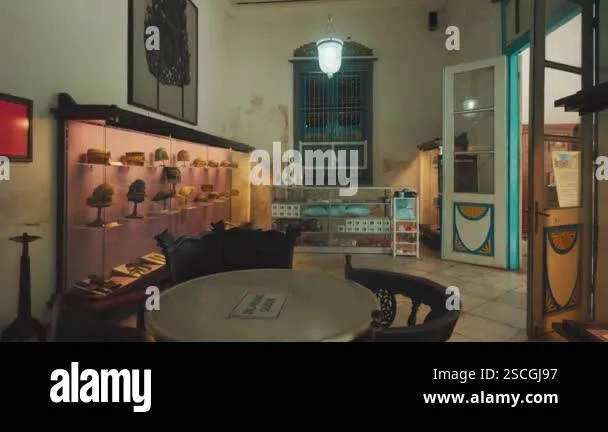
Consider the county historical museum in Wabaunsee County, Kansas, where a volunteer docent will walk you past a one-room schoolhouse, a collection of Barbed wire patents, and a photograph of every local farm family since 1870. Or the button museum in Lucedale, Mississippi. Or the teapot gallery in a converted storefront in Trenton, Texas. None of these appear on national top-ten lists. All of them, according to their keepers, are seeing attendance they have not known in decades.
The Numbers Behind the Anecdote
Directors of small American collections have begun reporting something that would have seemed improbable ten years ago: growth. Visitor logs in towns with populations under ten thousand show steady increases, with a notable share of guests driving more than an hour — often from the very metropolitan areas whose museums dwarf them in budget and square footage.
The explanations offered are usually practical. Gas prices make far-flung vacations less appealing. Road-trip culture, fueled by apps that surface oddities along two-lane highways, has turned the obscure museum into a destination rather than a detour. But practical explanations only go so far. People do not drive ninety minutes for a novelty. They drive ninety minutes for something they suspect they cannot find at home.
What Curatorial Honesty Looks Like
The distinguishing feature of the volunteer-run museum is not its size but its relationship to its own subject. A large institution must justify its existence to boards, donors, and accreditation bodies; its exhibitions are arguments, carefully footnoted. A small museum's collection is closer to a memoir. The objects were donated by people the volunteers knew, or were, or married.
This produces a kind of interpretation that no consulting firm can design. Labels are written in the first person. Gaps in the collection are acknowledged rather than hidden. When a museum in rural Nebraska displays a hand-cranked washing machine, the placard may include the name of the woman who used it and the year her husband bought it from the Sears catalog. That is not scholarship in the academic sense, but it is a form of truth — particular, verifiable, and stubbornly local.
Visitors notice. Many report that what stays with them is not any single artifact but the sensation of being guided through someone's genuine inheritance. Authenticity, that most debased word in cultural marketing, is here simply a description of fact.
The Economics of Devotion
It would be sentimental to pretend these institutions run on love alone, though love is the largest line item. Most operate on budgets that would not cover a major museum's landscaping contract. Admission is often a suggested donation. Climate control — the great enemy of preservation — is a constant, losing battle fought with window units and dehumidifiers.
What they lack in money, they compensate for in structure. Volunteer staffing means no payroll, and no payroll means survival requires only modest revenue. A good fundraising quilt raffle or a community supper can fund a year of operations. This fragility is often framed as a weakness, but it is also a form of accountability. A museum that lives on its neighbors' five-dollar bills must remain an institution its neighbors actually want.
The Larger Lesson
The rise of the small museum should not be read as a rebuke of large ones. The Metropolitan and the Smithsonian do work no county collection can. But the phenomenon does suggest a correction. American cultural life has tended to assume that quality scales — that the best art deserves the biggest room and the widest audience. The volunteer museums complicate that assumption. They demonstrate that meaning is not proportional to reach, that a collection of forty objects can matter more to a visitor than forty thousand, provided someone in the room cares about every one of them.
For travelers plotting a summer route, the advice is simple: take the state highway, watch the brown signs, and when a town of eight hundred people advertises a museum open Saturdays only, stop. The curtain rises on Main Street every weekend, and the admission is whatever you can spare.