In Praise of the Narrow Museum: A Defense of America's Smallest Institutions
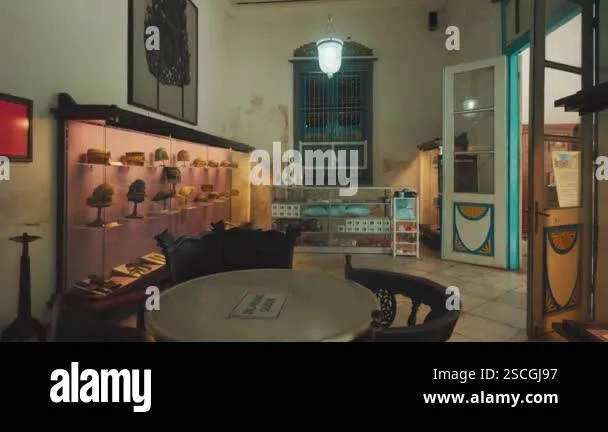
Photo: small quirky roadside museum interior with vintage artifacts and displays, via c8.alamy.com
There is a museum in this country dedicated entirely to the spork. Others honor barbed wire, mustard, the accordion, the paper clip, and the laundry industry of a single city block. They are small. Many are free. Several are open only on weekends, staffed by a docent who may also be the founder, the curator, and the person who fixes the furnace. And I would argue they hold a larger share of American cultural memory than any blockbuster traveling exhibition.
The Case Against Awe
Our funding and attention flow toward spectacle. Encyclopedic museums command the endowments, the architect-designed wings, the lines around the block. There is nothing wrong with this — the great institutions are treasures. But scale has a cost. A museum that must serve everyone tends, gently and without malice, toward the general. It must justify itself to boards, donors, and attendance projections. The narrow museum answers to no such arithmetic. It can afford to be specific because it was never trying to be universal.
Specificity as Custody
Consider what the hyper-specific museum actually preserves. A museum of a single immigrant community — say, the Lithuanian heritage museums scattered through Pennsylvania coal country or the Hmong cultural centers of the upper Midwest — holds objects that no national institution would think to collect: the embroidery pattern from one village, the union hall minutes, the photographs no archive thought to request. A museum devoted to one industry, like the salmon canneries of Astoria or the textile mills of the Carolinas, preserves the muscle memory of work that shaped generations and then vanished within a single lifetime.
This is custody in the truest sense. The encyclopedic museum preserves the canon; the narrow museum preserves the context that made the canon possible. One cannot substitute for the other, because once a hyper-local collection is dispersed, it cannot be reassembled. The knowledge lives in the volunteers who can tell you which machine came from which shuttered factory, and who owned what, and why it mattered.
The Undervalued Economics of Small
Small museums also practice a form of cultural economics worth defending. Their budgets are modest, their footprints are modest, and their presence anchors Main Streets and overlooked neighborhoods in ways a regional mega-museum cannot. They are destinations for school groups and road-trippers, but more importantly they are within walking distance — sometimes literally — of the communities they document. Their admission is often a donation jar. Their acquisitions come from attics, not auction houses.
A Modest Proposal
The argument here is not that anyone should feel guilty for choosing the Met over the spork museum. It is that we routinely undervalue institutions whose irreplaceability is total. A blockbuster exhibition will tour again. The collection of a single-industry museum, if it closes, is gone — sold, scattered, or landfilled, along with the interpretive knowledge of the people who understood it.
So the next time a road trip takes you past a sign for a museum of one narrow thing, consider stopping. Spend an hour. Drop ten dollars in the jar. Ask the docent a question and let them talk. You will be doing more for the continuity of American memory than any membership tier at a marble palace — and you will likely leave with a story no larger institution could ever tell you.