Ink, Paper, and Refusal: The Zine Makers Preserving America's Most Unfiltered Voices
There is a particular satisfaction in holding something that was never meant to be polished. A staple slightly off-center. A photograph reproduced until the shadows turn to solid black. Text that runs too close to the edge, not because the maker didn't notice, but because the maker didn't care. These are the signatures of the American zine—a form of publishing that has survived every prediction of its obsolescence and continues, quietly and stubbornly, to document what mainstream culture prefers to leave undocumented.
Zines—self-published, small-circulation periodicals typically produced by a single creator or a small collective—have existed in recognizable form since at least the 1930s, when science fiction enthusiasts began circulating mimeographed newsletters among themselves. By the 1970s and 1980s, the form had migrated into punk communities, feminist collectives, and activist networks, each of which recognized in the photocopier a tool of genuine cultural liberation. The Xerox machine was not glamorous. It was, however, available—and that availability was revolutionary.
Today, the zine is neither a relic nor a novelty. It is, by most measures, thriving.
A Counter-Archive in Plain Sight
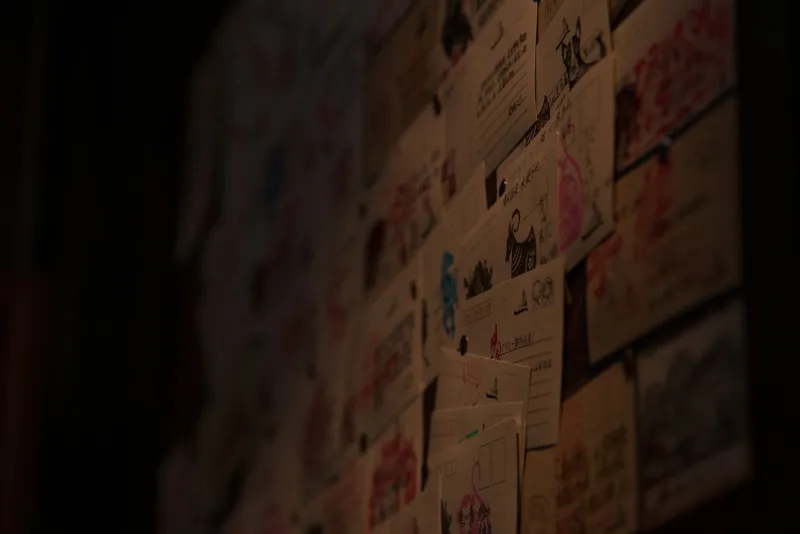
Visit any serious zine fair in the United States—the Chicago Zine Fest, the Portland Zine Symposium, the Brooklyn Zine Fest, or the dozens of smaller gatherings that take place in community centers, libraries, and bookshop back rooms from Albuquerque to Asheville—and the scale of production becomes immediately apparent. Tables overflow with hand-stapled booklets covering subjects that no traditional publisher would commission: the experience of navigating disability in a city designed for the able-bodied; the oral histories of a single city block slated for demolition; the grief journals of young men who were never taught to grieve; the illustrated field guides to plants that grow in sidewalk cracks.
This is documentation in its most direct form. The zine does not wait for institutional approval or market validation. It does not require an agent, a distribution deal, or a favorable review in a publication with national reach. It requires, at minimum, an idea, access to a copier, and the willingness to hand something you made to a stranger.
For many creators, that directness is precisely the point. "Every layer you add between the maker and the reader is a layer where something gets smoothed over," observes one Chicago-based zine publisher who has been producing her quarterly title—focused on working-class women's labor history in the Midwest—for eleven years. "I'm not interested in smooth. I'm interested in true."
The Tactile as Argument
The resurgence of physical zine culture in the 2020s carries an implicit argument about the limitations of digital media. This is not a simple technophobic position. Many zine makers maintain robust online presences; some distribute PDF versions of their work alongside physical copies. The choice to produce something physical is, rather, a considered statement about permanence, presence, and the particular kind of attention that a physical object demands.
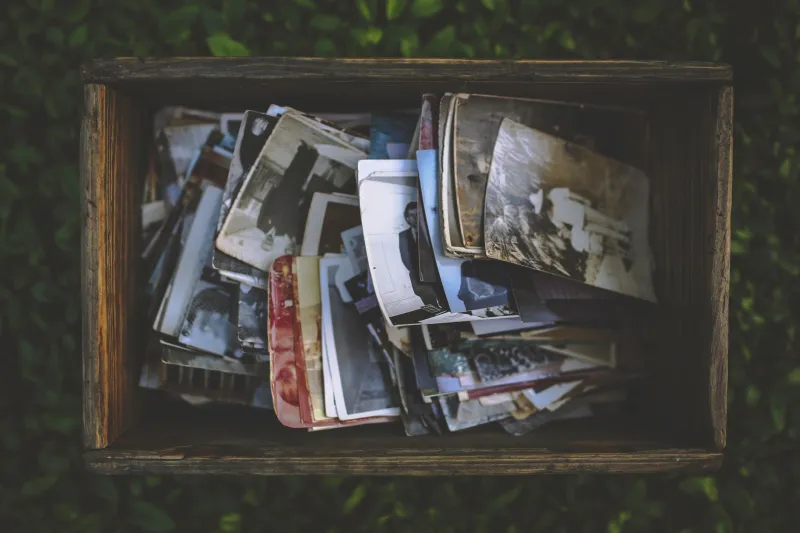
A post on social media exists in a stream. It arrives alongside other posts, competes with them for attention, and is displaced within hours by newer content. A zine sits on a shelf. It can be passed between friends, left in a coffee shop, discovered in a used bookstore a decade after its publication. It accumulates marginalia. It ages. It becomes, in time, an artifact.
Librarians and archivists have begun to take this seriously. Institutions including the Sallie Bingham Center for Women's History and Culture at Duke University, the Barnard Zine Library in New York, and the Queer Zine Archive Project—which has digitized thousands of LGBTQ+ zines dating back to the 1970s—have recognized that zines constitute a primary source record of American subculture that exists nowhere else. The experiences documented in these publications were not covered by newspapers. They were not the subject of academic studies. They were recorded only because someone with a photocopier decided that the record mattered.
Communities Built on Paper
Beyond their archival function, zines serve as the connective tissue of communities that might otherwise have no mechanism for cohesion. The zine distro—a distribution network, often operated by a single individual or small collective, that curates and ships zines from dozens of makers—functions as a kind of independent curatorial institution, applying taste and judgment to a form that officially has none.
In this sense, the zine ecosystem mirrors the broader mission that serious cultural organizations have always pursued: the identification and amplification of authentic voices that commercial infrastructure would otherwise silence. The difference is one of scale and speed. A zine distro in Portland can begin stocking a new maker's work within weeks of that maker's first publication. The feedback loop between creation and community is immediate in a way that traditional publishing cannot replicate.
This immediacy has made zines particularly significant during periods of social upheaval. The years following 2016, and again following 2020, saw documented surges in zine production across the United States. Makers responded to political events, public health crises, and social movements with publications that appeared within days of the events they addressed—a speed and specificity that no traditional media outlet could match and that no algorithm had yet learned to suppress.
The Question of Longevity
For all their vitality, zines face genuine preservation challenges. Produced on acidic paper, stored in basements and closets, printed in editions that sometimes number fewer than fifty copies, they are physically fragile in proportion to their cultural significance. The archival work being done by institutions like the Barnard Zine Library is essential, but it reaches only a fraction of what is produced.
Creators themselves are often ambivalent about preservation. The zine's ephemerality has historically been part of its identity—a refusal of the monument, an embrace of the moment. Some makers actively resist the idea of their work being institutionalized, concerned that the archive will impose the very kind of curatorial authority the zine was designed to circumvent.
This tension is not easily resolved, and perhaps it should not be. The zine exists precisely in the productive friction between permanence and disposability, between the desire to be heard and the refusal to perform for an audience beyond one's own community.
What Remains
What is certain is that the zine continues to fulfill a function that no other medium has successfully replaced. It is the publishing platform of last resort and, for many of its practitioners, of first choice—the form that makes no promises about reach or longevity, and in that honesty, achieves something that more ambitious platforms rarely manage.
The voices gathered in these photocopied, hand-stapled, imperfectly reproduced pages are not waiting to be discovered by the mainstream. They are already speaking, in print runs of fifty or five hundred, to the people who need to hear them. That, in the end, may be the most authentic definition of publishing that American culture has yet produced.