Field Notes From the Fence Line: How Backyard Birders Are Remaking the Science of Ornithology
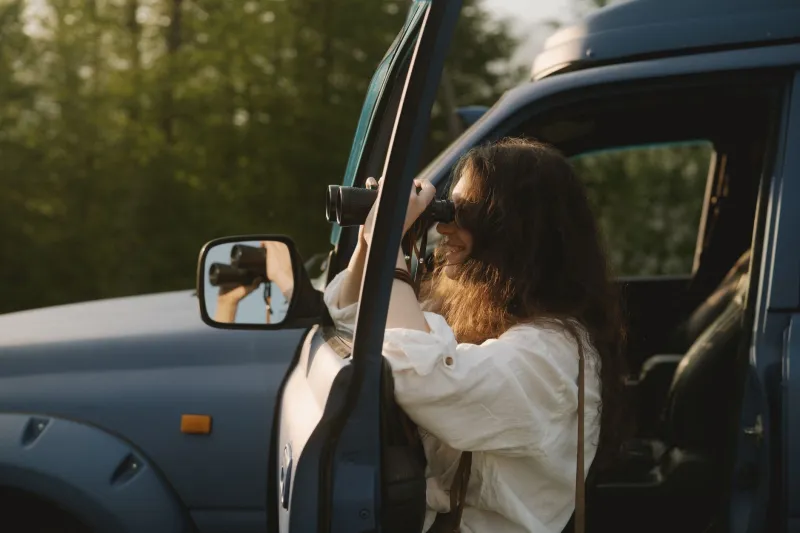
On a Tuesday morning in late October, a retired schoolteacher in Asheville, North Carolina, logs her forty-seventh consecutive day of backyard observations into a digital journal. She notes the arrival time of a Ruby-crowned Kinglet, the wind direction, the temperature, and the particular shrub where the bird paused longest. She has been doing this since 2018. Her records, cross-referenced with thousands of similar entries submitted by neighbors, commuters, and weekend hikers across the region, have quietly become part of one of the most significant ornithological datasets in the country.
She is not a scientist by credential. She is something arguably more consequential to the field right now: a disciplined, consistent observer with a stake in the place she watches.
The Infrastructure of Attention
The emergence of platforms like eBird — Cornell Lab of Ornithology's citizen science database — has transformed what was once a genteel hobby into a distributed research network of remarkable precision. With more than 100 million bird sightings submitted annually by volunteers across all fifty states, eBird has grown into the largest biodiversity database in the world. Researchers who once relied on periodic field surveys conducted by a small number of trained professionals now have access to continuous, granular, geographically diverse data that no academic institution could staff or fund on its own.
But the significance of this shift extends beyond sheer volume. What citizen scientists are providing is not merely quantity — it is a quality of observation rooted in sustained familiarity with particular places. A birder who has watched the same half-acre yard for six consecutive years notices things that a visiting researcher on a two-week survey cannot: the year the first American Goldfinches arrived two weeks earlier than usual, the winter the White-throated Sparrows never came at all, the gradual disappearance of a species that once appeared without fail.
These longitudinal, place-specific records are precisely what ornithology needs most as it grapples with the accelerating effects of climate change on avian behavior.
What the Institutions Missed
For much of the twentieth century, ornithological research was concentrated in universities, natural history museums, and federal wildlife agencies. These institutions produced foundational knowledge — species catalogs, breeding atlases, migration corridor maps — but their methods were constrained by funding cycles, academic calendars, and the physical limitations of professional field teams. Vast stretches of suburban and exurban America, the very landscapes where most people actually live, went systematically underobserved.
The consequences of that gap are now becoming visible. Several recent studies drawing on eBird data have identified significant shifts in migration timing and wintering range that earlier institutional surveys had not captured — not because the shifts were recent, but because no one had been watching consistently enough in the right places to document them. Citizen scientists, many of them working from the backyards and city parks that professional ornithologists rarely prioritized, had been accumulating the evidence all along.
In some cases, amateur observers have flagged anomalies — unusual species appearances, unexpected behavioral changes, localized population crashes — that subsequently prompted formal academic investigation. The relationship between credentialed science and citizen observation is no longer strictly hierarchical. It has become, at its best, genuinely collaborative.
The Practice and Its Disciplines
To characterize backyard birding as casual would be to misread the culture. The community that has developed around serious amateur ornithology maintains rigorous internal standards. Online forums, regional Audubon Society chapters, and state ornithological societies all function as informal peer networks where identifications are questioned, methodologies are debated, and data quality is taken seriously.
Field journals remain central to the practice. Many experienced birders maintain handwritten records alongside their digital submissions — noting behavioral details, habitat conditions, and contextual observations that structured data entry forms cannot accommodate. These analog records, accumulated over decades by dedicated observers, represent an archive of environmental knowledge that has no institutional equivalent.
The tools available to today's amateur have also grown considerably more sophisticated. Acoustic identification apps can distinguish bird species by song with high accuracy. Thermal imaging equipment, once the exclusive province of research teams, has become affordable enough for committed hobbyists. Networked trail cameras document species at feeders and nest boxes around the clock, generating photographic evidence that supplements written logs.
None of this technology, however, substitutes for the foundational discipline of patient, repeated observation. The birders whose data proves most valuable to researchers are invariably those who have committed to watching the same locations over long periods — who understand not just what they are seeing, but what is unusual about it.
Authenticity in the Field
There is something worth examining in the cultural moment that has made backyard birding one of the fastest-growing outdoor activities in the United States. The Cornell Lab reported a surge of new eBird accounts during the early 2020s, as millions of Americans, suddenly confined to their immediate surroundings, discovered that the natural world at the edge of their property was more intricate and more dynamic than they had previously noticed.
For many, the initial appeal was the accessibility of the practice — no special equipment required, no distant wilderness necessary. But what sustains the community's most dedicated participants appears to be something deeper: a sense of genuine contribution, of producing knowledge that matters, of participating in the documentation of a world that is visibly changing.
This is authenticity in its most practical form. Not the performance of expertise, but the accumulation of honest, careful attention over time. The schoolteacher in Asheville is not pretending to be a scientist. She is doing something that science depends upon — watching, recording, and submitting what she finds with fidelity to what she actually observed.
The Stakes of the Ordinary
America has lost nearly three billion birds since 1970, according to a landmark 2019 study published in Science. The declines cut across species and habitats, from grassland birds to forest songbirds to the common backyard visitors that many people have known their entire lives. Understanding the pace, geography, and causes of these losses requires exactly the kind of distributed, sustained observation that citizen science networks are uniquely positioned to provide.
The backyard naturalist, in this context, is not a peripheral figure in conservation science. They are, increasingly, an essential one. The data they generate informs habitat protection decisions, guides restoration priorities, and provides the baseline records against which future change will be measured.
What the growing community of amateur ornithologists represents, ultimately, is a reclamation of the idea that knowledge about the living world belongs to those who inhabit it — that careful attention, practiced honestly and consistently, is a form of cultural stewardship as genuine as any institutional credential. Their field notes are, in the most literal sense, a record of what this country's natural heritage actually looks like, written by the people who live alongside it every day.