Citizens of the Dark: How Amateur Astronomers Are Writing America's Unfinished Sky Atlas
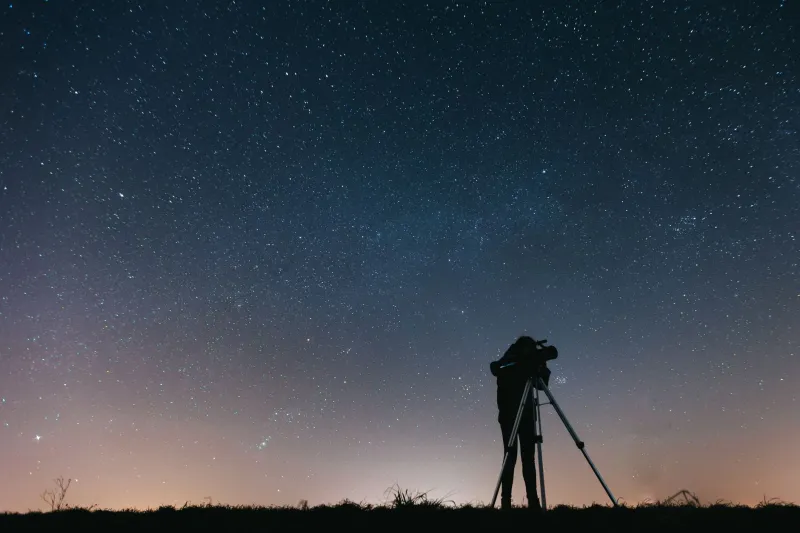
On a clear October evening in the high desert outside Magdalena, New Mexico, a retired schoolteacher named Patricia Orendorff sets up a fourteen-inch reflector telescope on the same patch of caliche she has used for eleven years. She records the seeing conditions in a spiral-bound notebook — atmospheric stability, humidity, the faint orange glow creeping northward from Socorro — before she even raises her eye to the eyepiece. The notebook is one of forty-three she has filled since 2009. No university has requested them. No observatory has catalogued them. Yet they constitute something genuinely rare: a sustained, granular record of one specific slice of American sky, written by someone who has committed to knowing it with unusual intimacy.
Patricia is not an anomaly. She is, in fact, part of a loose and largely uncelebrated national movement — thousands of amateur astronomers scattered across every state, from the Palouse hills of eastern Washington to the pine flatwoods of southern Georgia, who are generating astronomical records, dark sky assessments, and observational data that professional institutions have neither the resources nor the inclination to produce at this scale.
What the Professionals Leave Behind
American astronomy commands enormous institutional prestige. The names of the great observatories — Palomar, Kitt Peak, Mauna Kea — carry a weight that tends to dwarf everything outside their walls. Yet the very ambitions of professional astronomy create systematic blind spots. Research telescopes are committed years in advance to specific programs: exoplanet surveys, gravitational wave follow-ups, deep-field imaging. What they cannot do, almost by structural necessity, is attend to the particular and the local — the steady documentation of a regional sky over decades, the tracking of light pollution's incremental advance into a specific valley, the cataloguing of what can and cannot be seen from a given site on a given night.
This is precisely the territory that amateur observers have made their own. Organizations such as the American Association of Variable Star Observers (AAVSO), founded in 1911 and still headquartered in Cambridge, Massachusetts, have long demonstrated the scientific legitimacy of citizen astronomical data. AAVSO's global database now contains more than fifty million observations, the majority contributed by dedicated amateurs. But beyond formal citizen science programs, there exists a far wider and less structured culture of grassroots sky documentation that rarely surfaces in public conversation.
The Cartographers of Darkness
Among the most consequential work being done by amateur communities is the systematic mapping of dark sky sites — locations where light pollution has not yet extinguished the natural night. This is documentation with urgency attached to it. According to research published by the Light Pollution Science and Technology Institute, roughly eighty percent of Americans can no longer see the Milky Way from where they live. The dark places are retreating, and the pace of retreat is accelerating.
Groups like the Globe at Night program and the Dark Sky Observers Network coordinate volunteers who submit standardized sky brightness measurements from locations across the country, building a distributed portrait of the American night that no single institution could construct alone. In Colorado, a volunteer coalition called the San Luis Valley Dark Sky Alliance has spent six years documenting observing sites across a region that contains some of the lowest light pollution measurements in the contiguous United States. Their records track not only the darkness of individual sites but the conditions that threaten them — new agricultural lighting, expanding highway infrastructure, the spread of LED retrofitting that shifts light into the blue spectrum most damaging to night vision and ecological rhythms.
This is curatorial work in the fullest sense: the identification, documentation, and defense of something irreplaceable.
Community as Instrument
What is perhaps most striking about the amateur astronomy community is the degree to which it has cultivated genuine intellectual culture outside institutional frameworks. Star parties — gatherings where observers convene at dark sites to share equipment, compare notes, and simply look together — have become nodes of knowledge transmission that operate entirely on enthusiasm and mutual respect.
The Texas Star Party, held annually in the Davis Mountains, draws several hundred attendees each year to one of the darkest accessible sites in the lower forty-eight states. The event has no formal academic affiliation and charges no admission beyond a modest registration fee. What it offers instead is something harder to quantify: the experience of being surrounded by people for whom the sky is a subject of sustained, serious attention. Conversations range from eyepiece optics to the history of stellar nomenclature to the ethics of astrophotography's increasing dominance over traditional visual observation. Knowledge circulates horizontally, between equals, in the way that the best intellectual communities have always functioned.
Smaller gatherings replicate this dynamic at the regional level. The Astronomical Society of the Pacific, founded in San Francisco in 1889, supports dozens of affiliated clubs that host monthly observing nights and maintain libraries of logbooks and sky charts accumulated over generations of membership. These archives are, in their quiet way, primary sources — documents of how a place's sky has changed, and how the humans who watched it understood what they saw.
The Question of Legitimacy
Amateur astronomy occupies an interesting position in the broader culture of knowledge production. It is taken more seriously by professional scientists than most lay pursuits — the AAVSO collaboration is genuine, not ceremonial — yet it still exists largely outside the systems that confer cultural authority. Its practitioners do not publish in peer-reviewed journals. Their notebooks do not live in climate-controlled archives. Their expertise is not credentialed.
This is, in some respects, a loss. The data and observations being generated by serious amateur astronomers represent a form of knowledge that is both scientifically meaningful and culturally significant — a record of human attention paid to the natural world with consistency and care. That this record is so often invisible to institutions says less about its value than about the limits of institutional vision.
There are encouraging signs of change. The Vera C. Rubin Observatory's forthcoming Legacy Survey of Space and Time is explicitly designed to generate alerts that amateur observers can follow up on, creating a formal architecture for citizen contribution. Several university astronomy departments have begun working with local amateur societies to incorporate historical logbook data into long-baseline studies. The legitimacy is arriving, slowly, from the direction it usually comes from: utility.
Looking Up as a Cultural Act
But to reduce amateur astronomy to its scientific utility is to miss something essential about what it represents. Patricia Orendorff does not fill her notebooks because she expects them to be cited. She fills them because the sky above Magdalena has become, over eleven years of close attention, a place she knows — a place with a character, a history, and a future she feels some responsibility toward.
This is the disposition that Aurator exists to recognize: the commitment to attending carefully to something real, for reasons that exceed professional incentive. The backyard astronomers mapping America's neglected skies are not merely collecting data. They are practicing a form of cultural stewardship, insisting that the night remains worth knowing, that wonder is a discipline, and that the record of human attention to the cosmos is itself worth preserving.
The stars, after all, do not care whether they are observed by a funded researcher or a retired schoolteacher with a spiral notebook. But we should.