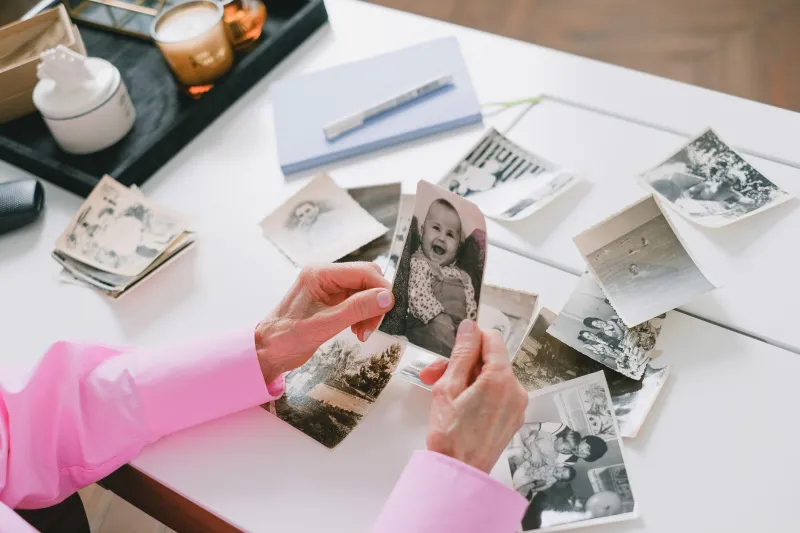
What the Recipe Card Remembers: The Home Cooks Preserving What Industrial Food Culture Erased
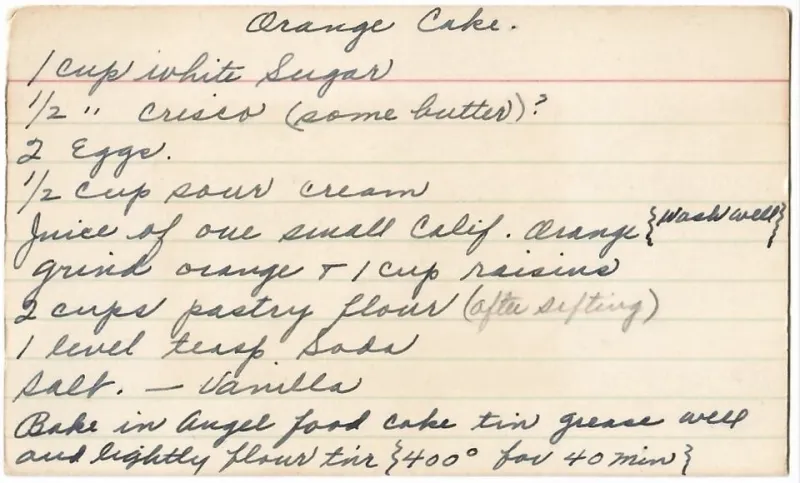
Photo: SJW, CC BY-SA 4.0, via Wikimedia Commons
There is a particular kind of knowledge that lives in a kitchen drawer. Folded inside a water-stained index card, smudged with decades of use, is a set of instructions that no algorithm has indexed and no food corporation has ever thought to monetize. It belongs to a family, to a region, to a tradition. And for a growing community of amateur food historians and devoted home cooks across the United States, preserving that knowledge has become an act of quiet but resolute cultural resistance.
American food culture has never been more visible. Streaming platforms devote entire channels to culinary content. Grocery chains commission recipe developers. Social media transforms every meal into a performance. Yet beneath this relentless production, something older and more specific is disappearing — the particular, unglamorous, irreplaceable cooking of particular people in particular places. The grassroots archivists working to stop that disappearance are doing so largely without institutional support, and largely without recognition.
The Homogenization Problem
To understand what these individuals are preserving, it helps to understand what is being lost. The industrialization of American food over the past seventy years has produced remarkable efficiency and considerable convenience. It has also produced a flattening — a tendency toward the broadly palatable, the shelf-stable, and the nationally scalable. Regional distinctions that once made American cuisine genuinely diverse have been absorbed, simplified, or quietly retired.
The gumbo of coastal Louisiana does not taste like the gumbo sold in chain restaurants across the Midwest. The tamales prepared in San Antonio kitchens during the Christmas season bear little resemblance to their mass-produced counterparts. Appalachian soup beans, Hmong herb gardens transplanted to Minnesota backyards, the vinegar-based barbecue traditions of eastern North Carolina — these are not merely recipes. They are living documents of migration, adaptation, and survival. When they vanish from active use without documentation, something culturally irretrievable departs with them.
Archives Built From Affection
The individuals doing this preservation work rarely hold academic credentials in food history. They are, more often, people who grew up watching a grandmother cook without measuring, who spent years trying to reconstruct a dish from memory, who eventually decided that the reconstruction itself was worth recording.
In practice, their methods are varied and inventive. Some maintain personal blogs that function less as lifestyle content and more as annotated archives — each post accompanied by family context, historical background, and honest acknowledgment of what remains uncertain or contested. Others have organized community cookbook projects, gathering recipes from specific ethnic communities, rural townships, or religious congregations, and producing printed volumes that circulate locally rather than aspiring to national distribution.
Still others have turned to oral history methods, recording video and audio of elderly relatives and neighbors cooking and narrating simultaneously — capturing not just the ingredients and technique, but the vocabulary, the sensory cues, and the cultural assumptions embedded in the preparation. A recipe that instructs the cook to add salt "until it tastes right" communicates something that a standardized measurement cannot. These archivists understand that, and they are careful to preserve the imprecision as much as the instruction.
The Stakes of Specificity
What distinguishes this movement from the broader trend of food nostalgia is its commitment to specificity. Nostalgia tends toward the general — the romanticized grandmother, the idealized Sunday dinner. Archival work requires precision: which grandmother, which community, which historical moment, which set of available ingredients shaped this particular dish.
That specificity is, in fact, the point. A recipe for red beans and rice that acknowledges its roots in the Monday washing-day traditions of New Orleans Creole households tells a story about labor, about domestic life, about the rhythms of a particular urban culture. A documentation of the pickled vegetables served in Vietnamese-American households in Northern California in the 1980s speaks to resettlement, to improvisation, to the negotiation between memory and availability. Stripped of that context, the food becomes content. Retained within it, the food remains culture.
Community Cookbooks as Counter-Archives
The community cookbook — long dismissed as a modest, even quaint form — has emerged as one of the most potent tools in this preservation effort. Unlike commercially published cookbooks, which are subject to the editorial pressures of market viability and aesthetic trend, community cookbooks operate outside those constraints. They are produced for and by specific communities, and they reflect those communities honestly, including the contradictions, the variations, and the occasional disagreements about what the authentic version of a dish actually is.
Organizations ranging from rural church auxiliaries to urban immigrant mutual aid societies have produced these volumes for generations. What is relatively new is the recognition, among food historians and cultural preservationists, that these books constitute a genuinely significant archive — one that, in aggregate, documents American culinary diversity with a granularity that no institutional collection has managed to replicate.
Several independent efforts are now working to digitize and catalog existing community cookbooks before they deteriorate further. The work is painstaking and underfunded, but the material it surfaces is consistently remarkable: recipes that appear in no other published source, ingredients sourced from plants that have since fallen out of common cultivation, techniques that reflect the specific constraints and ingenuities of particular times and places.
Resistance as Curation
It would be easy to frame this movement purely in terms of loss — of what is disappearing and why. But the individuals doing this work tend to describe their motivation in more affirmative terms. They are not simply mourning. They are insisting.
They are insisting that the food their families and communities prepared is worth documenting with the same seriousness applied to any other cultural artifact. They are insisting that authenticity in cuisine is not a marketing concept but a lived reality — one that requires active tending to survive. And they are insisting, perhaps most fundamentally, that the story of American food is far larger, stranger, and more interesting than the version currently being sold back to Americans through their screens.
In this sense, the archivists of appetite are doing something that aligns closely with the broader work of cultural preservation: they are refusing the simplifications that convenience and commerce prefer, and they are doing so with care, with rigor, and with genuine love for what they are keeping alive.
The recipe card in the kitchen drawer will not preserve itself. Someone has to decide it is worth saving. Across this country, quietly and persistently, people are making that decision every day.