Memory in Their Own Hands: The Grassroots Historians Saving Stories Institutions Left Behind
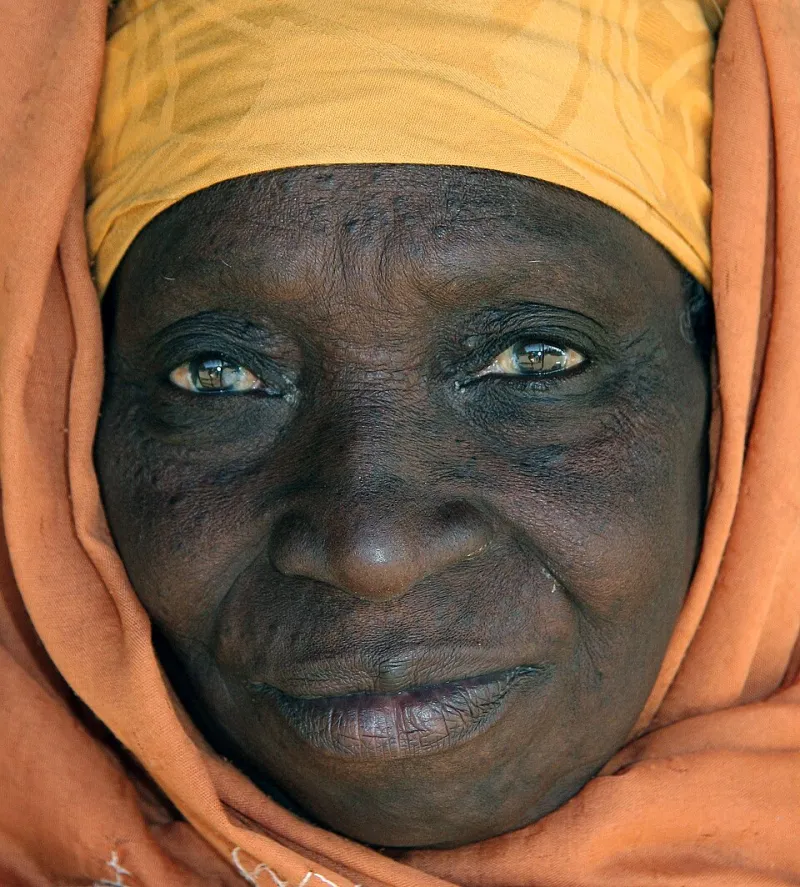
Photo: Ferdinand Reus, CC BY-SA 2.0, via Wikimedia Commons
The Record No One Else Was Keeping
In a converted spare bedroom in South Philadelphia, Maria Okonkwo keeps boxes. Dozens of them, organized by decade, each containing photographs, letters, church bulletins, and hand-drawn maps submitted by residents of a neighborhood that urban renewal projects largely erased between 1960 and 1985. She has no formal training in archival science. She holds no institutional affiliation. What she holds instead is the trust of several hundred families who believe, as she does, that if their neighborhood's story is not written now, it will not be written at all.
Okonkwo is not an anomaly. She is, increasingly, representative of a broad and determined movement reshaping how American communities understand and preserve their own pasts. From the former mining towns of Appalachia to the Hmong enclaves of the Twin Cities, from the historically Black neighborhoods of New Orleans to the Japanese American farming communities of California's Central Valley, grassroots archivists are doing the work that professional institutions have historically declined, underfunded, or simply failed to prioritize.
The implications extend well beyond nostalgia. What these individuals are assembling constitutes nothing less than a parallel record of American life — one that is more granular, more personal, and in many respects more honest than what official archives have traditionally preserved.
What Gets Left Out and Why
Understanding why this movement has emerged requires acknowledging a structural reality: formal archives have always made choices. Those choices, shaped by funding priorities, donor relationships, and the biases of their era, have systematically favored the documented over the undocumented, the prominent over the ordinary, and the majority over the marginal.
The consequences are not abstract. When a university library acquires the papers of a prominent industrialist but not the oral testimonies of the workers in his factory, it is not merely an omission — it is an editorial decision with lasting historical consequences. When a state historical society catalogues the architecture of a city's commercial district but not the social geography of its immigrant neighborhoods, the resulting archive tells a story that is, at best, incomplete.
Community historians understand this implicitly, often because they have lived the absence. Many begin their work after encountering a gap — a demolished building with no photographic record, a grandmother's stories that no one thought to transcribe, a neighborhood celebration that appeared in no newspaper because no reporter thought it worth covering. The work begins as a personal act of recovery and expands, almost inevitably, into something larger.
The Tools of the Committed Amateur
What distinguishes today's grassroots archivists from earlier generations of local history enthusiasts is the accessibility of the tools available to them. Digital recording equipment, high-resolution scanning, cloud storage, and open-source archival software have dramatically lowered the technical barriers to serious preservation work. A community historian operating from a kitchen table can now produce oral history recordings of broadcast quality and make them freely accessible to researchers anywhere in the world.
Organizations such as the Densho Project, which has spent decades documenting the experiences of Japanese Americans incarcerated during World War II, and StoryCorps, which has collected more than 700,000 interviews from ordinary Americans, have demonstrated the institutional potential of this approach. But it is the smaller, more localized efforts — the single-person operations running on personal savings and donated weekend hours — that represent the movement's true texture.
In Galveston, Texas, a retired schoolteacher named Calvin Broussard has spent eleven years photographing and documenting the surviving structures of the city's historically Black Broadway District, many of which have since been demolished. In Minneapolis, a collective of Somali American college students has built an oral history archive capturing the experiences of their parents' generation — the first wave of refugees who arrived in Minnesota in the 1990s. In rural West Virginia, a former coal miner's daughter maintains a digital archive of union meeting minutes, strike photographs, and company scrip, materials she rescued from a flooded basement before a family home was sold.
None of these individuals received grants to begin their work. None required permission.
The Question of Authority
This is precisely where the tension with established institutions becomes most visible. Professional archivists and historians sometimes raise legitimate concerns about methodology: questions of chain of custody, metadata standards, long-term digital preservation, and the interpretive frameworks applied to collected materials. These are not trivial considerations. An archive that cannot be reliably searched or authenticated has limited scholarly utility.
Yet the critique of grassroots archivists on methodological grounds occasionally obscures a more uncomfortable question: what is the cost of waiting for institutional standards to be met before documentation begins? Elders die. Buildings fall. Paper deteriorates. The perfect archival process, applied a generation too late, preserves nothing.
The more thoughtful voices within professional archival communities have begun to recognize this. A growing number of university libraries and historical societies are actively seeking partnerships with community historians, providing technical guidance and long-term storage solutions in exchange for access to collections that no institutional effort would have produced. The relationship is not without friction, but it is evolving.
Authenticity as Methodology
There is something worth examining in the nature of the trust that community historians are able to generate. When Maria Okonkwo asks a South Philadelphia family to share photographs of a grandmother who worked as a domestic laborer, she is not a stranger arriving with a clipboard. She is a neighbor, a known quantity, someone whose investment in the neighborhood's story is evident and personal. That proximity produces a different quality of disclosure than institutional oral history projects often achieve.
This is not to romanticize the amateur or dismiss the value of professional training. It is to observe that authenticity in cultural preservation is not solely a function of methodology. It is also a function of relationship — of who is asking, and why, and what they intend to do with what they learn.
The stories being gathered by grassroots archivists across this country are not waiting for validation. They are being told now, recorded now, organized now, by people who understand that the window for telling them is finite. Whether those stories eventually find their way into university collections or remain in converted spare bedrooms and community center filing cabinets, they will have been saved. That act — the decision to treat an ordinary life as worthy of record — is itself a cultural statement of considerable weight.
In a nation still negotiating which histories deserve to be told and by whom, the community historian's answer is both simple and radical: all of them, and by anyone willing to do the work.