Neighbors With Notebooks: The Passionate Collectors Quietly Assembling America's Most Honest Archive
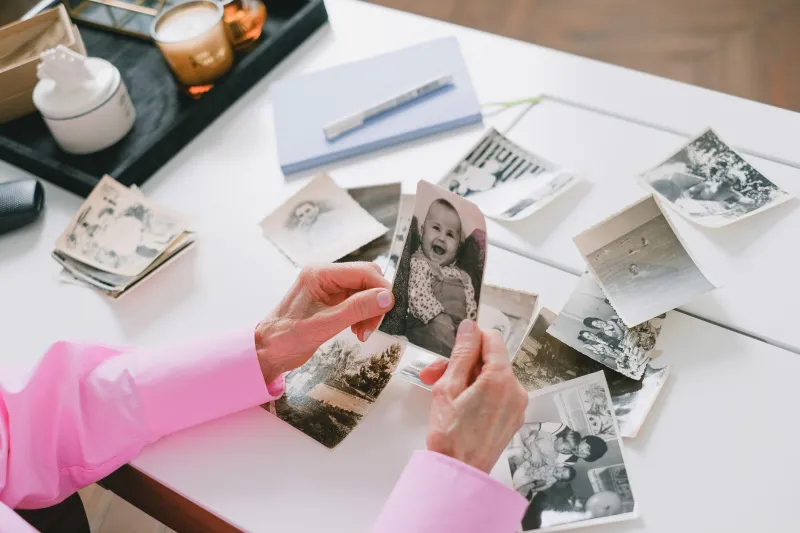
There is a woman in Albuquerque who has spent the last eleven years photographing the same three blocks. She is not a professional photographer. She does not have a grant or an institutional affiliation or a gallery waiting on the other end of her work. What she has is a secondhand camera, an intimate knowledge of her neighbors, and an unwavering conviction that the block parties, the front-porch arguments, the slow transformation of storefronts from family-owned to chain-owned, and the children who have grown from toddlers into teenagers within her frame — all of it matters and all of it is disappearing.
She is not alone.
Across the country, a quiet and largely uncelebrated movement of amateur archivists is assembling records of American life with a rigor and emotional intelligence that formal institutions have rarely matched. They are not affiliated with universities or funded by endowments. They are teachers, retirees, bus drivers, and small-business owners who have decided, often without being able to fully articulate why, that the story of their place is worth preserving — and that no one else is going to do it.
What Institutions Miss
The limitations of institutional archives are not a secret. Major repositories — state historical societies, university libraries, municipal records offices — operate under constraints that shape what they collect and, by extension, what survives. Funding cycles determine priorities. Acquisition policies favor the prominent, the documented, and the already-legible. The result is an archive of American life that skews heavily toward the powerful and the exceptional, leaving vast stretches of ordinary experience without a record.
This is not an accusation so much as a structural reality. Institutions are built to last, and longevity demands selectivity. What amateur collectors offer, by contrast, is a kind of radical comprehensiveness — a willingness to document the unremarkable because they understand, from proximity, that the unremarkable is often where the truth lives.
A retired postal worker in rural Mississippi has spent two decades recording oral histories from elderly residents of his county. He conducts interviews on a consumer-grade digital recorder, stores the files on external hard drives, and maintains a handwritten index in a composition notebook. The interviews cover topics that no formal oral history project would have thought to pursue: the specific sound of the cotton gin his grandmother described, the exact route the ice truck took through the neighborhood in 1952, the way a particular church deacon pronounced certain words during Sunday service. These details are not marginal. They are the texture of a life, and they exist because one man decided they were worth keeping.
The Hyperlocal as Historical
Perhaps nowhere is the amateur archive impulse more visible — or more sophisticated — than in the world of hyperlocal podcasting. In cities and small towns alike, independent producers are creating audio documentaries about their own communities with a depth and intimacy that regional public radio rarely achieves. These are not vanity projects. Many of them are meticulously researched, carefully edited, and built around primary sources that their creators spent months cultivating.
What distinguishes them from institutional productions is not technical quality — in some cases, the production values are modest — but rather access. The hyperlocal podcaster is a neighbor, a regular at the diner, a person whose face is known on the street. That familiarity opens doors that a visiting journalist or a university researcher cannot easily open. Subjects speak differently to someone they trust, someone who shares their frame of reference, someone who will be there next Tuesday when the interview is long over.
The result is a body of audio work that captures American communities in a register that is simultaneously more vulnerable and more accurate than most formal documentation. Arguments, ambivalence, humor, grief — these are present in ways that institutional recordings, with their implicit pressure toward coherent narrative, tend to smooth away.
The Question of Permanence
The most pressing challenge facing amateur archives is not quality or credibility. It is survival. Hard drives fail. Boxes of photographs deteriorate in attics. The collector who has spent a decade assembling an extraordinary record of a particular neighborhood may have no succession plan, no institutional partner, and no clear path to ensuring that the work outlives them.
This is the paradox at the heart of the movement: the very independence that makes these archives so honest also makes them fragile. Institutions, for all their limitations, are built to endure. A shoebox of negatives in a spare bedroom is not.
Some collectors have begun to address this problem through informal networks — connecting with local libraries, community colleges, or historical societies willing to accept donations and provide basic preservation support. Others have turned to digital platforms, uploading their materials to community-maintained repositories or partnering with organizations dedicated to grassroots archival work. The effort is uneven, and the losses are ongoing. But awareness of the problem is growing, and with it, a nascent infrastructure for protecting what these individuals have built.
Authenticity as Method
What unites these collectors — the block photographer in Albuquerque, the oral historian in Mississippi, the hyperlocal podcaster in any of a hundred American cities — is not a shared methodology or a common aesthetic. It is a shared conviction about what matters.
They believe, in a way that is both simple and radical, that the lives around them are worth documenting with care. They approach their subjects not as data points or representatives of larger trends but as specific, irreplaceable people in specific, irreplaceable places. Their archives are not arguments or analyses. They are acts of attention.
In a cultural moment saturated with content produced at scale and optimized for reach, that quality of attention is increasingly rare. The amateur archivist is not trying to go viral. They are not building a brand. They are trying to make sure that something true survives — that the particular texture of a particular life in a particular place does not simply dissolve into the general noise of the present.
That is, at its core, an act of cultural stewardship. And it may be, in the long run, one of the most significant ones being performed in America today.
The Record That Remains
History, the novelist Tim O'Brien once observed, is not what happened but what we can bear to remember. The amateur archivist works against that tendency — not by denying the difficulty of memory, but by insisting on its necessity. They document not because documentation is easy or glamorous or rewarded, but because they understand, with a clarity that institutional culture sometimes obscures, that the record we create now is the only record future generations will have.
The woman in Albuquerque is still photographing her three blocks. The composition notebook in Mississippi is nearly full. Somewhere, a podcast editor is cutting tape from an interview she conducted last week with a ninety-one-year-old woman who remembers the name of every family that lived on her street in 1960.
None of them are waiting to be discovered. They are simply doing the work — quietly, persistently, and with a fidelity to the real that the historical record will be richer for having received.