What the Hands Remember: The Artisans Racing to Rescue America's Vanishing Craft Knowledge
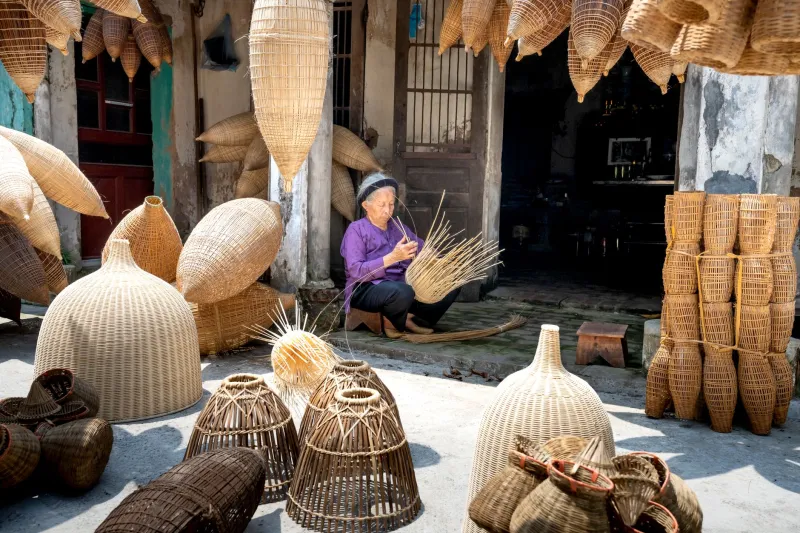
There is a particular kind of loss that arrives without announcement. No institution marks it. No headline captures it. It happens when the last person who knows how to do something simply stops being available to teach it — and the knowledge, residing entirely in muscle memory and lived practice, dissolves with them. This is the quiet catastrophe that a growing network of American craftspeople and cultural preservationists is determined to prevent.
From Appalachian white oak basketweaving to the historic indigo dyeing traditions of the Carolina Lowcountry, from the finger-woven sashes of the Great Lakes region to the adobe plastering techniques of the Southwest, these are not merely decorative arts. They are encoded histories — records of migration, adaptation, labor, and ingenuity that no written document can fully replicate. The people working to recover them understand this distinction with uncommon clarity.
The Weight of What Was Almost Lost
For many of these artisans, the entry point into preservation work was personal. A grandmother's loom, discovered in a barn. A fragment of a textile with a pattern no one in the family could name. A demonstration at a county fair that prompted a question no one could answer: How did they actually do that?
Mary Adkins, a fiber artist based in western North Carolina, spent nearly a decade tracking down the last practitioners of a specific overshot weaving draft that had been common in her region through the early twentieth century. The technique, which produces a dense, geometric patterned cloth once used for coverlets and table linens, had nearly vanished by the 1980s as synthetic fabrics displaced handwoven goods and as the older weavers who carried the knowledge aged out of teaching.
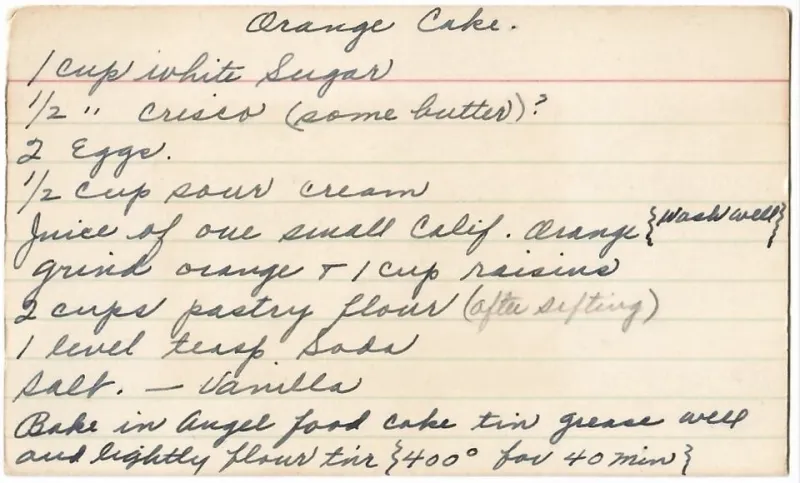
"You find one person who knows a fragment of it," she explains. "They point you to someone else. That person has passed, but their daughter kept a notebook. The notebook uses terminology no one uses anymore. You spend months just decoding the language before you can begin learning the actual skill."
This archaeology of technique is common among craft preservationists. The knowledge they seek rarely exists in a single, authoritative source. It is distributed across aging practitioners, partial records, museum collections, and the occasional academic study — and assembling it demands both scholarly patience and physical dedication.
The Practical Urgency
The challenge is not merely sentimental. Many of these techniques require tools that are themselves no longer manufactured, raw materials that demand specific agricultural or ecological conditions, and a depth of physical practice that cannot be compressed into a weekend workshop or a YouTube tutorial.
Consider natural dyeing. The revival of plant-based textile dyeing has attracted considerable popular interest in recent years, and rightly so. But the historic American traditions — Cherokee rivercane dyeing, the madder-based dye practices of Pennsylvania German communities, the sophisticated mordanting techniques developed by enslaved artisans in the antebellum South — involve layered knowledge systems that extend well beyond recipe lists. They encompass an understanding of regional plant ecology, water chemistry, fiber preparation, and seasonal timing that took generations to develop and cannot be adequately conveyed through digital instruction alone.
Jamila Osei, a textile artist and educator based in Charleston, South Carolina, has spent years working to document and transmit the Lowcountry indigo dyeing traditions that were central to the region's colonial economy and are intimately connected to the forced labor of enslaved Africans. For Osei, the preservation work carries an explicit ethical dimension.
"This knowledge was created under conditions of profound injustice," she says. "Recovering it isn't just about beautiful cloth. It's about acknowledging who built this country's material culture and making sure their contributions are legible and honored."
Teaching in a Distracted Age
Perhaps the most formidable obstacle facing craft preservationists today is not the scarcity of knowledge but the difficulty of transmitting it to a generation accustomed to frictionless, on-demand learning. Embodied skills — those that must be acquired through sustained physical practice, repetition, and direct mentorship — resist the formats that contemporary learners most readily embrace.
This tension has prompted considerable creative problem-solving within the preservation community. Some artisans have partnered with craft schools and folk art centers, embedding long-form apprenticeship programs within institutions that provide structural support and access to a broader student base. Others have turned to intensive residential workshops, bringing small cohorts of serious learners together for immersive multi-day experiences. A few have developed hybrid curricula that use video documentation not as a substitute for in-person instruction but as a preparatory tool — allowing students to arrive with foundational vocabulary and visual familiarity before the hands-on work begins.
The John C. Campbell Folk School in Brasstown, North Carolina, and the Penland School of Craft, also in the state's mountains, have both expanded their programming in response to growing demand for exactly this kind of deep-dive instruction. Meanwhile, organizations such as the Southern Highland Craft Guild and the American Folklife Center at the Library of Congress continue to provide archival infrastructure that supports individual preservation efforts.
Yet institutional support, however valuable, cannot substitute for the slower, more intimate transmission that most of these techniques ultimately require. The ideal learning relationship remains what it has always been: a skilled practitioner and a committed student, working side by side over an extended period of time.
Why Authenticity Demands Difficulty
There is a temptation, in discussions of craft revival, to focus on the aesthetic appeal of the objects produced — the satisfying weight of a handwoven blanket, the luminous depth of a naturally dyed yarn, the precise interlocking of a well-made basket. These qualities are real and worth celebrating. But the preservationists themselves tend to redirect attention toward something less immediately visible: the integrity of the process.
Authentic craft knowledge is not a set of techniques that can be approximated or stylistically evoked. It is a specific body of practice, developed within a specific cultural context, that produces results achievable in no other way. When that knowledge is lost, the objects that once embodied it can be imitated but not genuinely replicated. Something essential — not merely aesthetic but historical and human — is absent from the copy.
This is the conviction that drives the collectors of forgotten craft to keep searching, keep teaching, and keep making. They are not nostalgists mourning a simpler past. They are custodians of a living inheritance, working against time and distraction to ensure that what the hands once knew does not become permanently unknowable.
The work is slow. The community of practitioners is small. The window, in many cases, is narrowing. But the knowledge, where it survives, remains as precise and demanding and quietly extraordinary as it ever was — waiting, as it always has, for someone willing to learn it properly.