Dust, Light, and Memory: The Americans Quietly Rescuing Their Family Archives From Oblivion
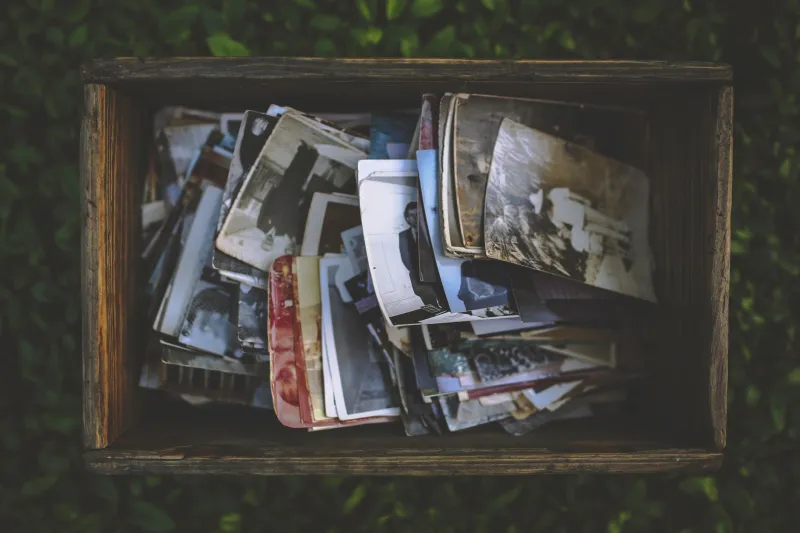
The shoebox arrives without ceremony. Sometimes it is discovered at the back of a closet during a parent's move into assisted living. Sometimes it surfaces when a grandparent dies and the house must be emptied. Occasionally it simply materializes — pulled from a shelf during a routine search for something else entirely — and suddenly a person is holding a letter written in 1943, a photograph of a great-grandmother whose name no one alive can confirm, or a handwritten ledger whose columns record transactions from a business that ceased to exist before the writer was born.
For a growing number of Americans, this moment of discovery has become a catalyst. Rather than returning the box to the shelf or passing it along to someone who will do the same, they are sitting down at a flatbed scanner, opening a cataloging spreadsheet, and beginning the slow, methodical work of preservation.
The Scale of What Is Being Lost
The deterioration of personal documents is not a dramatic event. It is a gradual one — a slow surrender to humidity, ultraviolet light, and the chemical instability of mid-twentieth-century paper stock. Photographs printed on certain processes common between the 1940s and 1980s are particularly vulnerable. Color slides fade. Magnetic tape, the medium on which many home movies were recorded throughout the 1970s and 1980s, degrades at a rate that archivists describe as unforgiving. Once the information is gone, it does not return.
Professional archives and historical societies have long understood this. What is newer is the recognition, spreading through online communities and family history forums, that the documentary record of private American life — the correspondence, the receipts, the annotated recipe cards, the birthday telegrams — exists almost entirely outside institutional custody. It lives in homes. And it is disappearing.
The Library of Congress and the Smithsonian can preserve what they hold. They cannot preserve what they have never received. The gap between those two conditions is where the basement archivists have found their purpose.
Tools of a Quiet Practice
The equipment required for serious home digitization has become, in recent years, both affordable and capable. A quality flatbed scanner with sufficient optical resolution for photographic reproduction costs less than two hundred dollars. Archival-quality polyester sleeves and acid-free storage boxes are available through library supply vendors and, increasingly, through mainstream retailers. Software for image correction, metadata tagging, and file organization ranges from free, open-source options to modestly priced professional tools.
Online communities — on platforms ranging from dedicated genealogy forums to general-interest social media groups — have developed detailed guides covering best practices for file naming conventions, resolution standards, color profile management, and long-term storage redundancy. The knowledge base, once confined to professional conservators and institutional archivists, has been democratized with considerable thoroughness.
What has not been democratized is the time. The work is slow. A single afternoon might yield fifty properly scanned, corrected, and cataloged images. A shoebox of three hundred photographs represents weeks of careful effort. Those who undertake it describe a particular quality of attention the work demands — a sustained, unhurried engagement with material that resists being rushed.
What the Documents Reveal
The discoveries made during this process are rarely the dramatic revelations of popular genealogy television. They are more often quiet and specific: a letter that reveals a great-uncle's humor, a photograph that places a family member in a city they never mentioned visiting, a document that complicates or confirms a story passed down through oral tradition.
For many practitioners, the most significant revelations are not factual but tonal. Reading correspondence written across decades, they encounter the voices of people they knew only as elderly relatives — and find those voices younger, more uncertain, more recognizably human than memory preserved. The archive restores dimensionality to figures that time had flattened.
Others encounter documentation of experiences their families never discussed directly: evidence of wartime service, records of economic hardship, immigration papers that clarify or complicate national identity narratives. In several documented cases, individuals have discovered that family stories of ethnic or regional origin were substantially different from what the documents confirm — discoveries that prompt not distress but a more honest reckoning with inherited identity.
A Distributed Archive of American Life
The cultural significance of this movement extends beyond individual families. Considered in aggregate, the documents being preserved in spare bedrooms and home offices across the country constitute an extraordinarily rich record of ordinary American experience — the kind of experience that institutional archives, by their nature, have tended to underrepresent.
Major archives collect the papers of the prominent. They preserve the correspondence of politicians, the manuscripts of published authors, the business records of significant enterprises. What they have rarely collected with systematic intention is the letter a factory worker in Youngstown wrote to his sister in 1951, or the photograph album a Mexican-American family in San Antonio maintained through the 1960s, or the household accounts a widowed farmer in rural Tennessee kept through the Depression.
These are precisely the materials that basement archivists are now preserving. Some are depositing digital copies with regional historical societies or state archives, which increasingly accept community-contributed digital collections. Others are uploading to shared platforms — FamilySearch, the Internet Archive, Ancestry — where the material becomes searchable and, in some cases, discoverable by researchers who have no family connection to it whatsoever.
The result is something archivists have occasionally described as a distributed, participatory preservation infrastructure: not a single institution holding a unified collection, but thousands of individuals each maintaining a node in a larger network of cultural memory.
The Weight of Stewardship
Those who engage in this work speak of it with a seriousness that transcends hobby. There is, in the language they use to describe it, a distinct sense of obligation — to the people who created the documents, to the family members who may one day want access to them, and to something less easily named: a responsibility to the record itself.
This is not an unusual disposition among those who work with primary sources. Professional archivists describe similar feelings. What is notable is that it has emerged, organically and without institutional encouragement, among people with no formal training in preservation — people who simply found themselves in possession of irreplaceable material and declined to let it deteriorate.
That declination, multiplied across thousands of households, represents a meaningful act of cultural stewardship. It will not produce a single unified archive with a finding aid and a reading room. It will produce something more diffuse and, in certain respects, more authentic: a preservation of American life at the scale at which American life is actually lived — particular, unedited, and stubbornly specific.
The shoebox, it turns out, was never merely personal. It was always part of the record.