The Record Correctors: How Amateur Genealogists Are Rewriting the Margins of American History
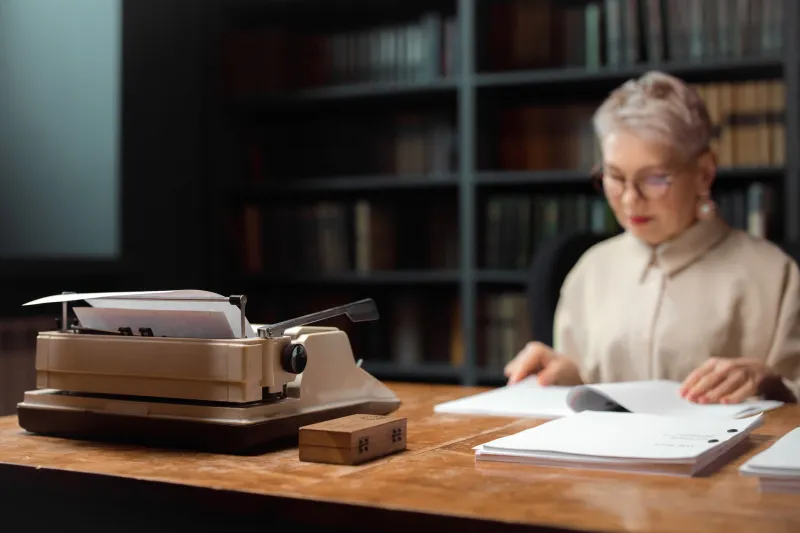
There is a particular kind of fury that arrives quietly. It does not announce itself with protest or proclamation. It shows up in a courthouse basement at nine in the morning, in the form of a retired schoolteacher from Memphis turning the pages of a ledger that lists her great-great-grandmother not by name, but by age, gender, and estimated monetary value. The fury is real. So is the determination that follows it.
Across the United States, a growing movement of amateur genealogists—many of them descendants of enslaved people, Indigenous communities, immigrant laborers, and other groups historically excluded from the formal record—are conducting research that is reshaping what we understand American history to actually contain. They are not trained archivists. They are not affiliated with universities. But the work they are producing is, in many cases, more granular, more emotionally precise, and more culturally complete than anything housed in the nation's most celebrated institutions.
What the Official Record Left Out
American historical documentation has always been selective. The archives that survived—census records, land deeds, military registries, church logs—were created by and for people with legal standing, social recognition, and institutional power. Entire communities existed in the gaps between those documents, present in daily life but absent from the ledger.
For the descendants of enslaved African Americans, this absence is both literal and deliberate. Enslavers recorded the names of the people they held in bondage only when legally or economically necessary—in estate inventories, in bills of sale, in insurance documents. First names appear occasionally. Last names, family relationships, and individual histories rarely do. The genealogical record, as formally constituted, begins for many Black American families not at birth but at emancipation, and even then only partially.
Similar erasures mark the records of Native American communities displaced by federal policy, of Chinese laborers who built the transcontinental railroad under contracts that treated them as interchangeable, of Mexican American families whose land tenure predated statehood but whose claims were systematically invalidated. Official history did not misplace these people. It made choices about them.
Amateur genealogists are now making different choices.
The Tools That Changed the Equation
The democratization of genealogical research over the past two decades has been genuine and consequential. Digitized records, DNA testing platforms, and collaborative online databases have placed tools in the hands of ordinary citizens that were previously available only to professional researchers with institutional access. Platforms such as FamilySearch, Ancestry, and Freedmen's Bureau Online have made documents searchable that once required physical travel to access. DNA matching has allowed researchers to reconstruct kinship networks that paper records destroyed.
But technology alone does not explain the depth of what is being found. What distinguishes the most significant genealogical work being done today is the interpretive intelligence that researchers bring to incomplete evidence. A gap in a census record is not simply an absence—it is itself a piece of information. A surname change between two documents tells a story. A child listed in one household and gone from the next raises questions that a skilled researcher knows how to pursue across multiple record types simultaneously.
This is the kind of layered, contextual reading that historians are trained to perform. The genealogists doing it now largely taught themselves, often out of necessity, because no institution was going to do it for them.
Parallel Archives and Community Trusts
The outputs of this research are not remaining private. Across the country, grassroots genealogists are pooling their findings into community-held archives that exist outside traditional institutional structures. Church basements, community centers, and digital repositories maintained by volunteer collectives are becoming the custodians of records that no county historical society thought to preserve.
In Mississippi, networks of researchers focused on Freedmen's Bureau records have assembled cross-referenced databases linking formerly enslaved individuals to their descendants across multiple generations—work that complements and in some cases corrects the holdings of state archives. In the Southwest, Indigenous genealogists are documenting oral family histories alongside documentary evidence, creating hybrid records that honor the epistemological traditions of their communities while engaging the evidentiary standards that institutional history demands.
These parallel archives are not simply supplements to the official record. In many cases, they are corrections of it. They surface individuals who were miscategorized, events that were misattributed, and relationships that were deliberately obscured. They are, in the most precise sense of the word, acts of curation—the selection and preservation of what matters, performed by people who understand its significance from the inside.
The Question of Authority
The genealogical community has not been without its internal debates about methodology, verification, and the standards by which claims should be substantiated. The risk of confirmation bias—of finding what one hopes to find—is real in any research conducted by people with personal stakes in the outcome. Responsible practitioners within the movement are the first to acknowledge this.
What is notable, however, is that many of the most rigorous genealogists working today hold their own findings to standards that exceed what popular historical narratives have traditionally required. They cite their sources. They distinguish between documented fact and reasoned inference. They acknowledge uncertainty rather than papering over it with confident assertion. The irony is not lost on them that the official record, which has long claimed the authority of objectivity, was itself assembled by people with considerable personal and political stakes in what it contained.
Authenticity, in this context, is not a credential. It is a practice—one that many amateur genealogists have developed with considerable sophistication.
What Gets Preserved When Communities Preserve Themselves
The deeper significance of this movement may lie less in the individual discoveries it produces than in the model it represents. When communities take responsibility for their own historical documentation, they make different decisions about what is worth keeping. They preserve the names of midwives alongside those of physicians. They record the histories of congregations alongside those of municipalities. They understand that a family's experience of a historical event is itself historical evidence, not merely anecdote.
This is not sentiment. It is an epistemological position—a claim about what counts as knowledge and who is qualified to produce it. It is, at its core, an argument about authenticity: about whose account of the past deserves to be called the record.
The genealogists working in this tradition are not waiting for institutions to validate that argument. They are building the archive first, and letting the evidence speak on its own terms. What they are assembling, document by document and generation by generation, is a version of American history that is more complete than the one we inherited—not because it is more comfortable, but because it is more true.