The Open Door and Its Complications: What Happens When Anyone Can Publish Art
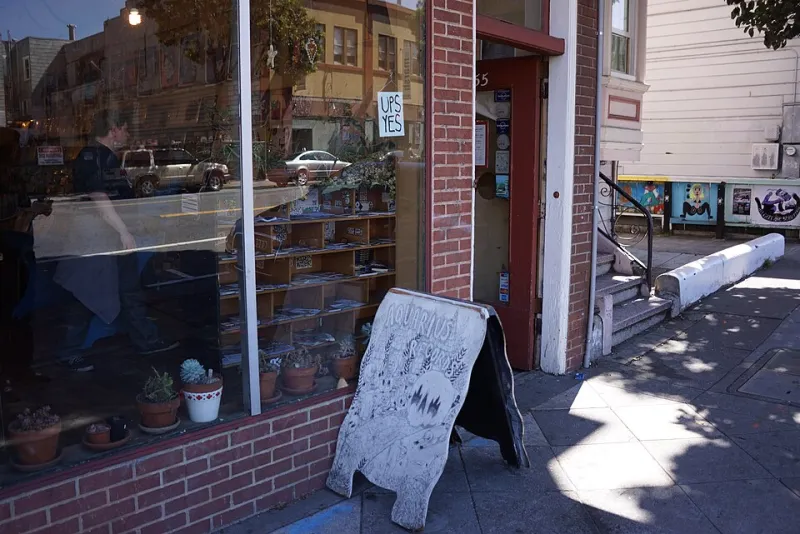
For most of the twentieth century, the path to artistic recognition in America ran through a relatively small number of checkpoints. Galleries decided which visual artists deserved wall space. Record labels determined which musicians reached listeners. Curators, critics, and academic institutions collectively managed the boundaries of what counted as serious experimental work. The system was imperfect, often exclusionary, and frequently wrong. It was also, in a structural sense, legible. Artists and audiences alike understood the rules of admission.
That architecture has not merely cracked — it has been substantially dismantled. The consequences are proving to be considerably more complex than the liberation narrative that accompanied the digital revolution's early years.
What the Gatekeepers Actually Did
Before celebrating their absence, it is worth examining what traditional gatekeepers provided alongside their well-documented failures. The gallery system, for all its insularity and bias, offered something that algorithms cannot replicate: curatorial argument. When a curator placed a particular artist's work in a particular context alongside particular other works, that arrangement made a claim about meaning. It said: these objects are in conversation with each other and with history. The selection was an act of interpretation, not merely administration.
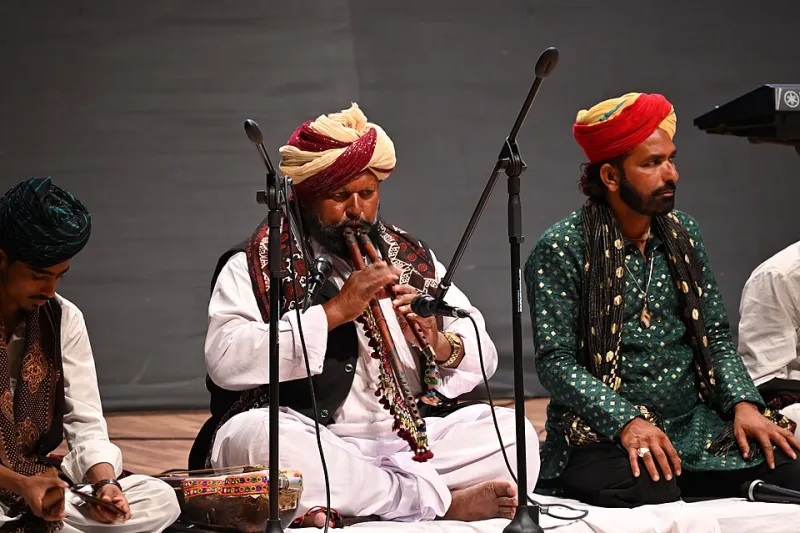
Record labels, similarly, performed a filtering function that was not purely commercial. A&R representatives with genuine musical knowledge sometimes identified and developed artists whose work would not have survived the raw economics of self-release. The failures of this system — its racial exclusions, its commercial conservatism, its treatment of artists as assets — are real and well-documented. But the function itself was not without value.
What the digital age has eliminated is not just the gatekeepers' power but, in many cases, the curatorial act itself. The question now facing experimental artists is not merely how to reach an audience without institutional support, but how to create the conditions for meaningful reception in an environment that was not designed to support it.
The Algorithmic Invisibility Problem
The promise of digital platforms was democratic access: any artist, anywhere, could publish work and find the audience that work deserved. The reality is more ambiguous. Platforms built on engagement metrics — plays, likes, shares, watch time — are structurally biased toward content that generates immediate emotional response. Experimental work, by definition, often resists immediate comprehension. It asks for a different kind of attention than the algorithm is designed to reward.
This creates a paradox for artists working in genres that have historically depended on gradual discovery and sustained engagement. An experimental electronic composer whose work unfolds over forty-minute pieces faces a platform architecture optimized for the first thirty seconds. A performance artist whose practice requires physical presence and durational commitment finds that documentation rarely captures what matters most about the work. A visual artist whose paintings reward extended looking is reduced, on most platforms, to a thumbnail.
The result is not that experimental art disappears — it is that it becomes algorithmically invisible while remaining technically accessible. The open door leads into a room where the lights are calibrated for a different kind of seeing.
The Creators Building Differently
And yet. The artists navigating this terrain most successfully are not simply adapting to platform logic — they are constructing alternative architectures for discovery and community within and alongside it.
Consider the experimental musicians who have built substantial, committed audiences through Bandcamp and Substack rather than Spotify. These platforms operate on fundamentally different economic and attentional models: listeners pay directly, subscribe for access to process and context, and develop relationships with artists that more closely resemble patronage than passive consumption. The audiences are smaller. The engagement is deeper. The economic sustainability, while still fragile, is more directly tied to artistic conviction than to algorithmic favor.
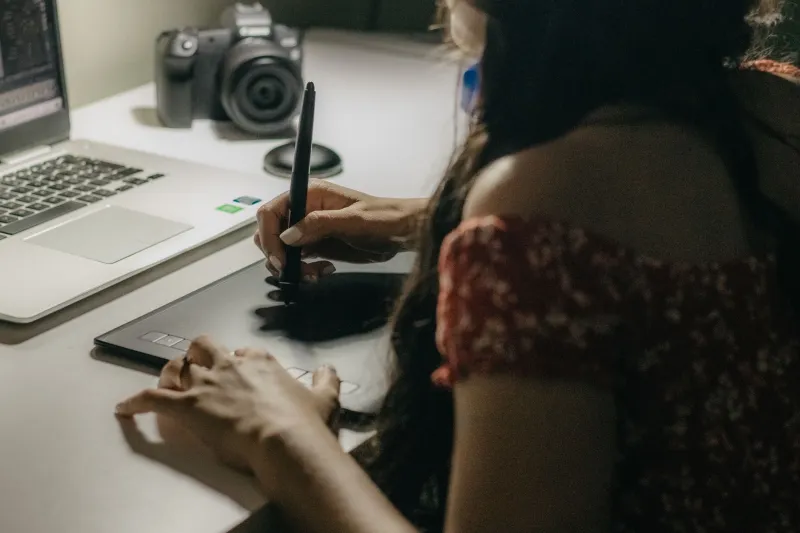
In the visual arts, artists working across Instagram and dedicated newsletter platforms have found that the most durable followings come from documenting process rather than presenting product. When an artist shares the intellectual and material development of a work — the failures, the pivots, the influences, the questions — they invite an audience into the experience of making rather than simply the experience of viewing. This is not a marketing strategy. It is a pedagogical one, and it produces a fundamentally different kind of audience relationship.
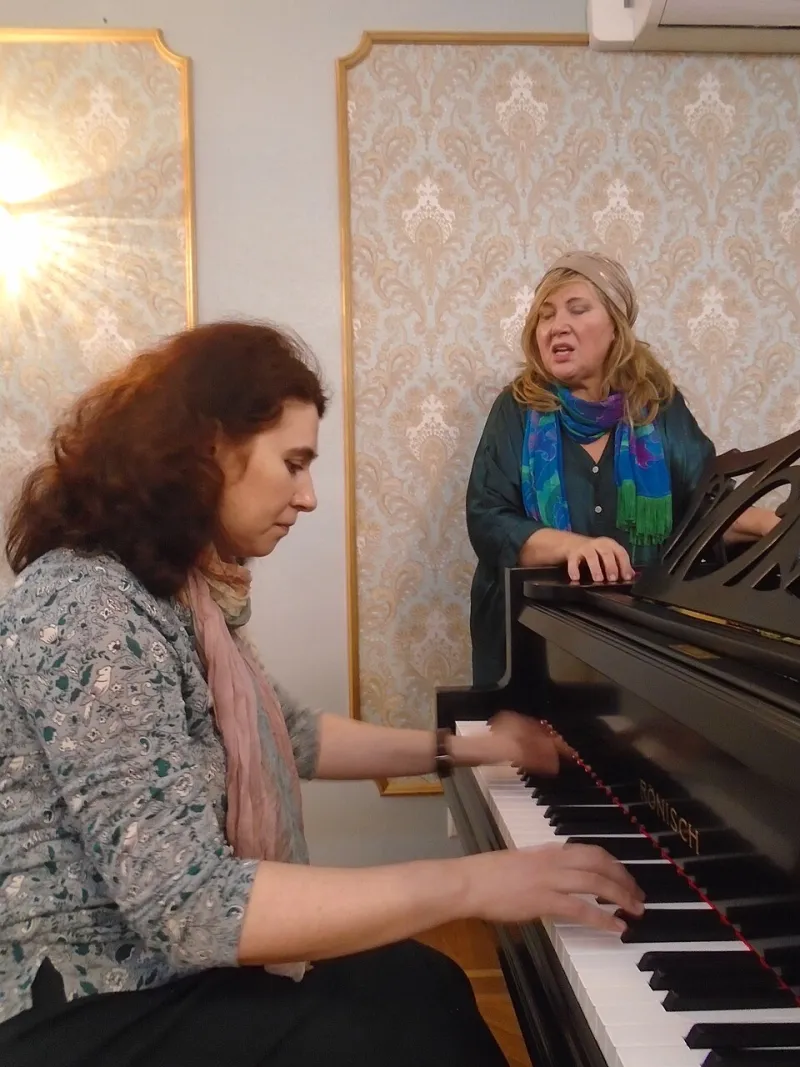
Performance artists, perhaps the most digitally resistant form, have responded in two distinct directions. Some have embraced the documentation of live work as a separate art form in itself — treating the video record not as a substitute for presence but as a different object with its own formal properties. Others have doubled down on liveness, using digital platforms exclusively to announce and contextualize work that can only be experienced in person. Both approaches treat the platform as a tool rather than a venue.
Oversaturation and the New Scarcity
The volume of work now publicly available creates its own form of scarcity — not of access, but of attention. In a cultural environment where any motivated person can find virtually any kind of experimental art within minutes, the meaningful constraint is no longer availability. It is the capacity to distinguish, to contextualize, and to care.
This is where the absence of curatorial infrastructure becomes most acutely felt. Without trusted intermediaries — critics, curators, programmers with sustained expertise and genuine accountability — audiences navigating experimental work have fewer reliable guides. Algorithmic recommendation systems learn from past behavior rather than artistic judgment, which means they tend to narrow rather than expand the range of what any given listener or viewer encounters.
The artists responding most thoughtfully to this condition are those who have assumed curatorial responsibility themselves. They write about their influences. They recommend other artists publicly and specifically. They build playlists, reading lists, and program notes that situate their work within a broader conversation. In doing so, they are not merely promoting themselves — they are contributing to the cultural infrastructure that their work requires to be properly received.
Platform Dependency and Its Discontents
The final complexity in this landscape is one that the most honest observers of digital culture acknowledge with some discomfort: the independence that digital platforms appear to offer is, in many cases, a form of dependency wearing different clothes. An artist whose entire audience lives on a single platform is not free — they are subject to that platform's terms of service, algorithmic changes, and potential obsolescence.
The artists building the most genuinely durable careers are those treating digital platforms as one component of a diversified presence rather than its entirety. Direct email lists, physical releases, community spaces, and live events all function as anchors that keep an audience relationship from being entirely mediated by a third party's infrastructure.
This requires more effort than simply publishing work online. It requires treating the cultivation of audience relationship as an ongoing artistic and ethical responsibility — which, perhaps, is what the best curators always understood it to be.
The door is open. What we make of the room beyond it remains, as it always has, a matter of intention, craft, and care.