No Applause Required: The Regional Theater Directors Putting Vision Before Validation
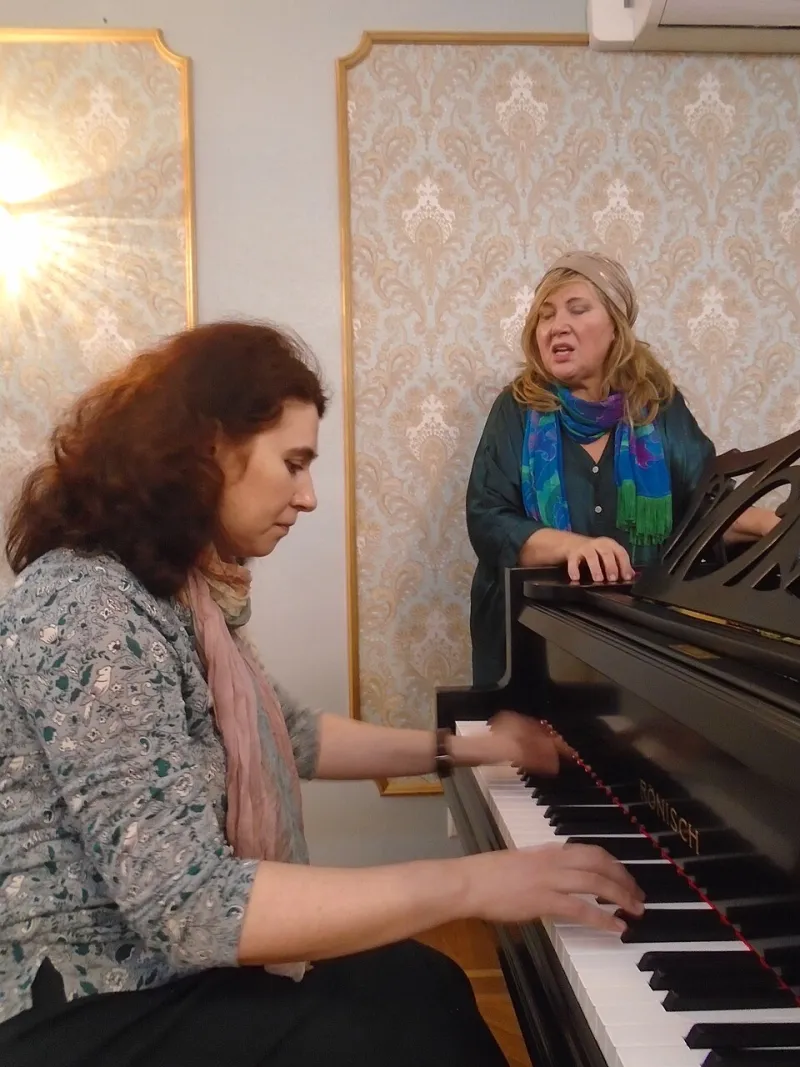
Photo: Vyacheslav Kirillin, CC BY-SA 4.0, via Wikimedia Commons
There is a particular kind of silence that falls over a theater before the lights drop — not the silence of an audience waiting to be entertained, but the silence of people prepared to be changed. That distinction, subtle as it sounds, is the animating principle behind a quiet movement reshaping American regional theater. Across cities from Albuquerque to Baltimore, a cohort of working directors is refusing to dilute their creative instincts in exchange for broader appeal. What they are building instead is something the commercial stage rarely manufactures: genuine artistic trust.
The Funding Tightrope
To understand what these directors are protecting, one must first understand what they are up against. Regional theater in the United States operates within a funding ecosystem that is, at best, precarious. The National Endowment for the Arts allocates resources that, when distributed across thousands of applicants, rarely sustain a full season. Private donors bring their own tastes and expectations. Foundations increasingly favor work that demonstrates measurable community impact — a metric that does not always translate cleanly to the stage.
For directors committed to ambitious, unconventional work, this financial reality creates a persistent negotiation between what they believe in and what they can afford to produce. Yet many are finding that transparency, rather than compromise, is the more effective currency. Directors who communicate the reasoning behind their artistic choices — through pre-show discussions, program notes, and direct community engagement — report that audiences are far more willing to follow them into unfamiliar territory than conventional wisdom suggests.
One approach gaining traction among smaller companies is what might be called the repertory covenant: building a subscriber base that commits not to a season of guaranteed favorites, but to a season of honest work. The implicit agreement is that the director will not condescend to the audience, and the audience will not demand the familiar. It is a relationship built on mutual respect rather than transactional entertainment.
Casting as Argument
Perhaps no creative decision reveals a director's values more plainly than casting. In regional theater, where union agreements, limited budgets, and geographic talent pools all impose constraints, the casting process becomes a kind of compressed manifesto.
Directors working outside the commercial mainstream tend to approach casting as an act of interpretation rather than illustration. Rather than seeking performers who physically resemble a playwright's stage directions, they ask what a particular combination of bodies and voices argues about the play's meaning. A production of Death of a Salesman with a Black Willy Loman does not merely diversify the cast — it reframes the American Dream itself as a racialized construct, pressing the text to reveal dimensions that a conventionally cast production might leave dormant.
This kind of casting demands dramaturgical courage. It also demands that directors be willing to explain their choices to audiences who may arrive with fixed expectations. The directors who do this work most effectively treat the conversation as part of the production — not a defensive justification, but an invitation to deeper engagement.
Adaptation and the Question of Fidelity
The relationship between a director and a text is one of the most contested territories in theater. Purists argue that the playwright's intentions should govern every production decision. Experimentalists contend that a living play must be perpetually remade to remain alive. The directors working most authentically today tend to occupy a more nuanced position: they approach a text with genuine reverence and genuine freedom simultaneously.
Adaptation, in this context, is not vandalism. It is archaeology. When a director transplants a Greek tragedy to a contemporary American setting — a reservation in Montana, a public housing complex in Chicago — the goal is not novelty for its own sake. The goal is to excavate the emotional and political truth that the original form was designed to carry, and to deliver that truth to an audience for whom ancient Athens is an abstraction.
What distinguishes authentic adaptation from mere concept is the director's willingness to let the text resist the frame. The best adaptations honor the moments when the source material refuses to cooperate with the contemporary setting — those productive tensions are where the real theatrical meaning lives.
Staging Against the Algorithm
The rise of streaming has changed what American audiences expect from storytelling. Episodic pacing, intimate close-ups, and the ability to pause and rewind have recalibrated attention in ways that live performance cannot simply ignore. Some regional directors have responded by accelerating their productions, trimming texts, and incorporating cinematic visual language into their staging. Others have made a deliberate counter-argument.
These directors are leaning into what theater can do that no screen can replicate: the irreducible presence of live bodies in a shared space, the unrepeatable specificity of each performance, the audience's awareness of its own collective breath. Rather than competing with streaming on streaming's terms, they are making the liveness of theater the central artistic statement.
This means staging choices that would be incomprehensible on film — extended silences, deliberately slow movement, direct address that implicates the audience in the action. It means trusting that the discomfort of being in a room with something real is itself a form of meaning.
Building the Loyal Room
What these directors share, beyond their artistic convictions, is a particular understanding of community. They are not trying to maximize audience size. They are trying to deepen audience relationship. The distinction matters enormously.
A theater that chases the widest possible audience tends toward the least challenging work. A theater that cultivates a committed community of witnesses — people who return not because the work is comfortable but because it is consistently honest — can sustain a more demanding artistic vision over time. This is not elitism. It is the recognition that art requires a different kind of attention than entertainment, and that some audiences are hungry to give it.
The directors building these communities are doing so through patience, consistency, and a willingness to be accountable to their artistic choices. They hold open rehearsals. They invite dramaturgical conversation. They make the process visible without making it precious. In doing so, they are not just making better theater — they are cultivating a more discerning audience for American culture at large.
That, perhaps, is the most radical act of all.