Pressed for Truth: Who Actually Benefits When You Buy Vinyl?
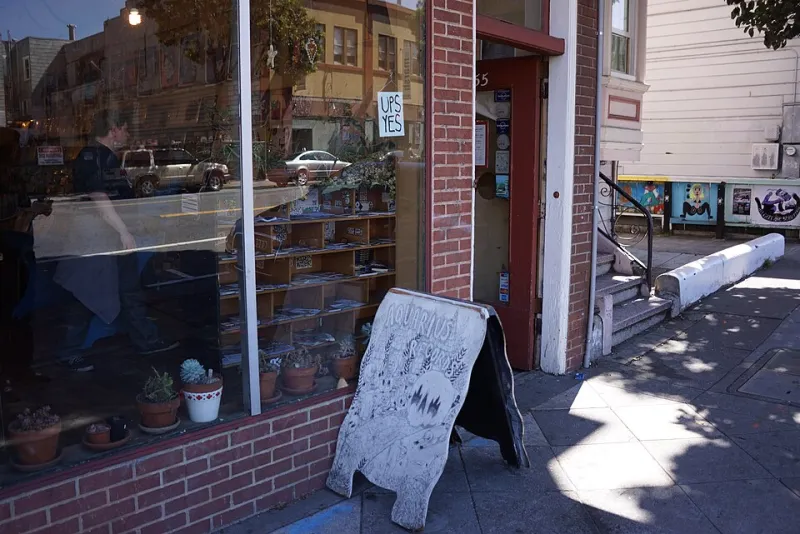
Photo: Plateaueatplau, CC BY-SA 4.0, via Wikimedia Commons
There is something undeniably satisfying about holding a record. The weight of it, the deliberate ritual of lowering a needle onto a groove, the commitment to sitting with an album from first track to last — these are experiences that streaming cannot replicate. It is little wonder, then, that vinyl sales in the United States have climbed for eighteen consecutive years, with the Recording Industry Association of America reporting that LPs generated over $1.4 billion in revenue in 2023 alone, surpassing CD sales for the second year running.
The cultural narrative around this revival is a compelling one: listeners, weary of the disposability of digital consumption, are returning to a format that demands attention and rewards patience. Independent record stores have been reborn. Album artwork is once again a meaningful artistic statement. And yet, when one looks past the aesthetics and into the ledger books of small labels and working musicians, the picture becomes considerably more ambiguous.
The Allure of the Object
To understand the vinyl market's current moment, it helps to distinguish between two distinct consumer motivations that often get conflated in popular coverage. The first is a genuine philosophical commitment to album-oriented listening — the belief that music is best experienced as a cohesive artistic statement rather than a shuffled sequence of individual tracks. The second is the appeal of vinyl as a collectible object: a physical artifact whose value is partly aesthetic, partly nostalgic, and increasingly financial.
These motivations are not mutually exclusive, but they produce very different market outcomes. The collector economy — driven by limited pressings, colored variants, and exclusive retailer editions — has inflated the secondary market to extraordinary levels. First pressings of canonical albums now regularly sell for hundreds, sometimes thousands, of dollars on platforms like Discogs. Meanwhile, a new pressing of a debut album from an emerging independent artist might retail for thirty-five dollars, sit in a bin for six months, and eventually be returned to the distributor.
"There's a real bifurcation happening," says one co-owner of a small Midwestern label that releases music across genres including folk, jazz, and experimental electronic. "The conversation about vinyl in the press is almost entirely about heritage acts and collector culture. For us, pressing records is a financial gamble every single time."
The Economics of Independent Pressing
The economics of vinyl production have grown increasingly hostile to independent labels over the past several years. A global shortage of pressing plant capacity — caused in part by major labels dramatically scaling up their vinyl output — drove wait times to as long as two years at the height of the backlog. While that bottleneck has eased somewhat, pressing costs remain elevated. A run of five hundred units can cost a small label upward of four thousand dollars before a single copy is sold, distributed, or promoted.
Royalty structures compound the difficulty. Physical music royalties are negotiated individually and vary widely, but artists signed to small labels frequently receive between ten and twenty percent of the retail price — meaning that on a thirty-five-dollar record, a musician might see between three and seven dollars per unit sold. On a pressing of five hundred copies, a complete sellout would yield the artist between fifteen hundred and thirty-five hundred dollars, a figure that rarely covers the time and expense invested in recording.
"People think buying our record is this radical act of support," notes one singer-songwriter who releases music through a regional label in the Pacific Northwest. "And I appreciate the sentiment. But the math is the math. Unless you're doing significant volume, vinyl is more of a statement than a revenue stream."
What the Major Labels Understood First
The vinyl revival, it should be noted, was not orchestrated by independent artists or small labels. Major labels recognized the format's commercial potential early and moved aggressively to capitalize on it. Today, a substantial portion of vinyl sales are driven by catalog reissues of major-label artists — Taylor Swift, Harry Styles, Fleetwood Mac — and by major-label new releases packaged with exclusive variants designed to incentivize multiple purchases from the same fan base.
This practice, sometimes called "variant farming," has drawn criticism from artists and fans alike. When a single album is released in eight different colored pressings, each available only at a specific retailer, the purchase decision shifts from an engagement with the music to a completionist consumer behavior that benefits the label's revenue far more than it benefits the artist's livelihood.
Independent labels, by contrast, generally lack the capital to engage in variant farming at scale. Their releases compete for shelf space and consumer attention against products backed by marketing budgets that dwarf their entire annual operating costs.
The Record Store as Cultural Institution
None of this is to diminish the genuine cultural value of the independent record store, which remains one of the most important spaces for music discovery and community in the United States. Events like Record Store Day have drawn hundreds of thousands of shoppers to local shops and have, by most accounts, meaningfully sustained brick-and-mortar retail. Many store owners report that the vinyl revival has allowed them to expand their inventory, hire staff, and invest in programming — in-store performances, listening events, and educational initiatives — that serve their communities.
"We exist to connect people with music they might not have found otherwise," says the owner of an independent shop in the Mid-Atlantic region. "If someone comes in for a Taylor Swift exclusive and leaves with a record by a local artist they'd never heard of, that's exactly what we're here for."
This connective tissue — between the mainstream appeal of vinyl as a format and the discovery of less commercially prominent music — may be the most genuinely promising aspect of the revival. The question is whether it is happening consistently enough, and at sufficient scale, to meaningfully alter the fortunes of independent musicians.
Toward a More Intentional Listening Economy
The vinyl revival contains within it both a genuine cultural impulse and a consumer trend that has been enthusiastically monetized by the same industry structures that dominate digital streaming. These two realities coexist, and neither cancels the other out.
For listeners who wish to translate their affection for the format into meaningful support for artists, the path is relatively straightforward: purchase directly from artists or from their labels' own webstores, where margins are higher; seek out releases from independent labels rather than catalog reissues from major conglomerates; and attend the live performances and local events that remain the most economically significant revenue source for most working musicians.
Vinyl, at its best, is an invitation to listen with intention — to treat music as something worth one's full attention. That invitation is worth accepting. But the act of purchasing a record, however pleasurable, is not in itself a guarantee that the artist who made it will be able to continue making music. Authentic support requires a degree of curiosity about where one's money actually goes.
The crackle at the beginning of a record is often described as the sound of something real. So, too, should be the conversation about what the vinyl economy genuinely offers to the people who create the culture it celebrates.