Roots and Resistance: How America's Folk Musicians Are Reclaiming Their Sound From the Algorithm
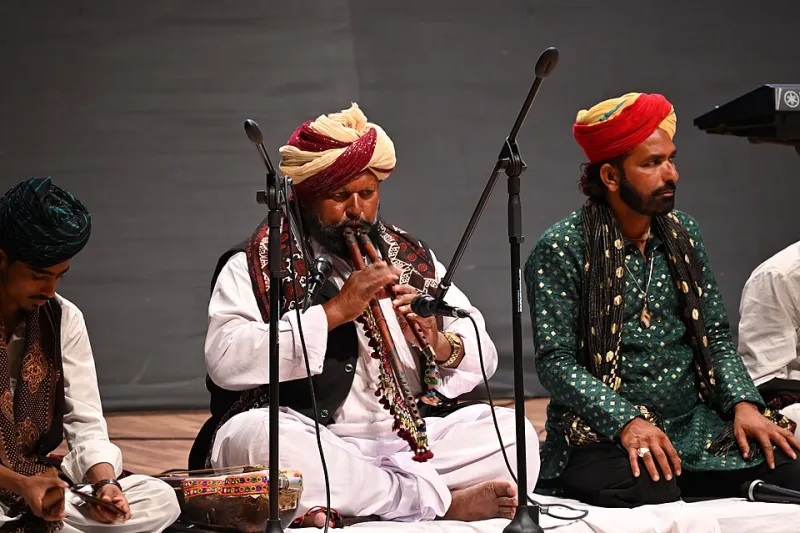
Photo: Wander-earth, CC BY-SA 4.0, via Wikimedia Commons
There is a particular kind of silence that falls over a small-town venue just before a folk musician begins to play. It is not the silence of indifference — it is the silence of recognition. The audience knows, often instinctively, that what they are about to hear belongs to them in a way that a curated playlist never could. Across the United States, from the hollows of Appalachia to the high plains of the Midwest, independent folk artists are cultivating exactly this kind of connection, deliberately turning away from the commercial machinery of the streaming era in favor of something far more durable: authenticity.
The Streaming Paradox
The past decade has seen music consumption transform at a dizzying pace. Platforms such as Spotify and Apple Music have made virtually all recorded music instantly accessible to anyone with a smartphone and a monthly subscription. For artists, however, this democratization has come with a significant cost. The economics of streaming — where a single play generates fractions of a cent in royalties — have made it nearly impossible for independent musicians to sustain themselves financially through recorded output alone. More troubling still, the algorithmic logic that governs these platforms tends to reward a certain kind of sonic conformity, nudging artists toward sounds that have already proven popular rather than those that reflect genuine cultural specificity.
Folk musicians, whose work is by its very nature tied to place, community, and lived experience, find themselves particularly ill-served by this model. A song rooted in the coal-mining history of eastern Kentucky or the fishing traditions of the Gulf Coast does not slot neatly into an algorithm's preferred categories. It resists easy classification. And that resistance, many artists argue, is precisely the point.
"I'm not trying to be discovered by someone scrolling through a mood playlist," said one Appalachian singer-songwriter who has spent the past several years performing exclusively at community halls, church benefits, and regional festivals. "The people I want to reach already know these stories. My job is to tell them better than they've been told before."
Building Community, Not Metrics
What distinguishes this new generation of folk revivalists from previous ones is not their sound — which often draws directly from the Child Ballads, shape-note singing traditions, and Dust Bowl-era songwriting — but their strategic relationship with the music industry itself. Many have made a conscious decision to forgo major label interest, social media virality, and even significant online distribution in favor of building audiences through direct engagement.
This approach manifests in remarkably practical ways. House concerts, a format in which artists perform in private homes for small, invited audiences, have seen a notable resurgence in cities and rural communities alike. These gatherings generate income directly for the artist, eliminate the intermediary entirely, and create an atmosphere of intimacy that no streaming platform can replicate. Similarly, regional folk festivals — many of them operating on shoestring budgets and sustained entirely by volunteer labor — have become vital incubators for this movement, connecting artists with listeners who are actively seeking music that feels earned rather than manufactured.
In the Pacific Northwest, small collectives of folk musicians have begun releasing music exclusively on limited-edition vinyl and cassette, available only at performances or through direct mail order. In the Southeast, artists are partnering with local historical societies and libraries to document and perform music tied to specific counties and communities. These are not nostalgia projects. They are acts of cultural stewardship.
The Question of Commercialization
It would be a mistake to romanticize this movement uncritically. The deliberate rejection of commercial structures carries its own complications. Artists who decline streaming distribution limit their potential reach, which can mean that the very traditions they seek to preserve remain unknown to younger audiences who might otherwise become their most passionate advocates. There is also the economic reality that performing exclusively at community venues rarely generates the kind of income that allows an artist to devote themselves fully to their craft.
Some musicians have found a workable middle path. They maintain a modest online presence — a simple website, occasional recordings shared freely on platforms like Bandcamp, perhaps a mailing list — without surrendering their artistic identity to the demands of algorithmic optimization. They treat digital tools as what they are: tools, not destinations. The destination remains the room, the stage, the circle of listeners gathered around a fire.
"There's nothing wrong with people finding you on the internet," acknowledged one Tennessee-based multi-instrumentalist whose recordings have earned a devoted following through word of mouth rather than playlist placement. "The question is what they find when they get there. If what they find is real, they'll come to a show. And that's where the music actually lives."
What Authenticity Actually Means
The word "authentic" is one of the most overused and most misunderstood terms in contemporary music discourse. Marketing departments deploy it freely. Critics invoke it vaguely. But within the folk music tradition, authenticity carries a specific and demanding meaning. It is not about acoustic instruments or vintage recording techniques. It is about the relationship between a song and the community from which it emerged — whether the music carries within it the specific weight of a particular place, a particular history, a particular way of understanding the world.
By this definition, authenticity cannot be manufactured, and it cannot be optimized. It can only be cultivated, slowly, through sustained engagement with a community and its stories. This is why the folk artists leading this resurgence are, almost uniformly, deeply embedded in their local environments. They attend the same churches, frequent the same diners, and participate in the same civic life as their audiences. Their music is not a product delivered to consumers — it is a conversation conducted among neighbors.
A Cultural Reckoning Worth Attending
The resurgence of regional folk music in the streaming age is not merely a musical phenomenon. It is a cultural statement about what communities choose to value and preserve when commercial forces would prefer they forget. At a moment when algorithmic platforms increasingly mediate our relationship with art, the folk musicians gathering in community halls and living rooms across America represent something genuinely countercultural: the insistence that music must mean something beyond its metrics.
For listeners willing to seek them out — to consult local event listings, to attend a house concert, to drive two hours to a regional festival — these artists offer an encounter with American musical heritage that no streaming queue can provide. The music is there, waiting. The silence before the first chord is still electric. And the stories being told are, by any meaningful measure, worth the journey.