Beyond the Concert Hall: How a New Generation of Classical Musicians Is Finding Freedom in Silence and Sound
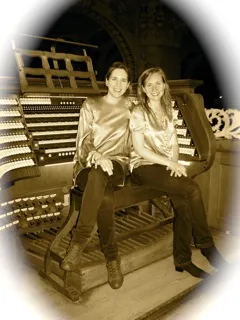
Photo: ClaudiaChauchat, CC BY-SA 3.0, via Wikimedia Commons
The concert hall carries with it a set of unspoken agreements. Audiences arrive in formal attire or close approximations thereof. They sit in rows. They do not speak. They applaud at designated intervals. The music, for its part, is expected to announce itself — to fill the space with demonstrable craft and interpretive authority, to justify the architecture around it. For generations of classically trained musicians, this agreement has been both a privilege and a constraint.
A growing number of American composers and performers are quietly renegotiating its terms.
The Weight of Tradition
Classical training in the United States is, by design, an immersive encounter with inherited forms. Students at conservatories and university music programs spend years learning to play within established frameworks — to honor the intentions of composers long dead, to develop technique in service of a canon that stretches back centuries. This education produces musicians of extraordinary skill. It also produces musicians who are deeply aware of what the tradition asks of them.
For some, that awareness becomes a kind of creative pressure. The question of what to do with a classical education in the twenty-first century — how to speak in a contemporary voice while carrying the weight of an immense inheritance — is not a new one. But the answers being offered by a younger generation of musicians are increasingly radical.
Rather than attempting to expand or update the classical tradition from within, many of these artists are moving laterally — borrowing from ambient music, electroacoustic composition, drone, and improvisation to create work that inhabits a genuinely hybrid space. The result is a body of music that is neither classical nor experimental in any settled sense, but something more provisional and more alive.
The Productive Emptiness of Minimalism
Minimalism has a complicated relationship with American classical music. The movement associated with composers such as Philip Glass, Steve Reich, and La Monte Young established a rigorous aesthetic vocabulary in the latter half of the twentieth century — one built on repetition, gradual transformation, and the expressive potential of sustained tones. That vocabulary has been absorbed into the broader culture to such a degree that it now risks becoming its own kind of orthodoxy.
What is emerging among younger musicians is something more open-ended — a minimalism of disposition rather than doctrine. These artists are drawn not to the structural systems of their predecessors but to the quality of attention that sparse music demands. When a composition offers the listener very little, what remains becomes extraordinarily significant. A single held note, the silence before a phrase resolves, the barely perceptible decay of a piano's sustain — these become events of genuine magnitude.
Several composers working in this mode describe their practice in terms of creating space rather than filling it. One Brooklyn-based composer who trained as a classical pianist before turning to ambient composition puts it plainly: "The concert hall trains you to believe that music is what happens between the silences. I became more interested in what the silence is doing."
Unconventional Instruments and the Expansion of the Palette
Alongside the embrace of minimalist aesthetics, many of these musicians are expanding their instrumental vocabularies in ways that would have been considered eccentric within conventional classical circles just two decades ago. Prepared piano — the technique of placing objects on or between the strings of a piano to alter its timbre — has moved from the experimental margins toward something approaching a standard tool. Field recordings, synthesizers, and custom-built instruments constructed from found objects appear regularly in the work of composers who also hold advanced degrees in traditional composition.
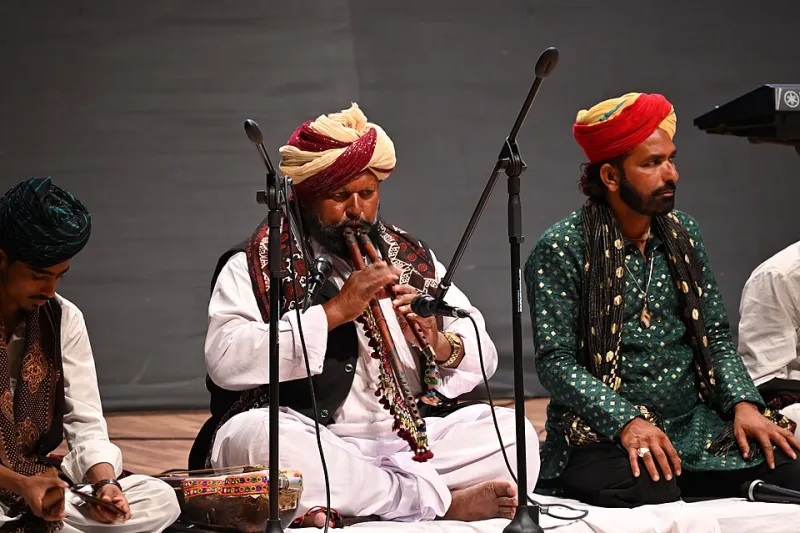
In some cases, the expansion is geographic as well as sonic. Musicians trained in Western classical traditions are incorporating instruments and tuning systems from other cultures not as ornament but as structural elements — a practice that requires both musical sophistication and genuine cultural engagement. A Los Angeles-based ensemble whose members trained at major American conservatories has built a substantial following performing works that integrate Hindustani classical structures with Western harmonic language, recorded in spaces chosen for their acoustic properties rather than their prestige.
Bypassing the Gatekeepers
Perhaps the most consequential development in this movement is not musical but logistical. The institutional infrastructure of classical music — the major orchestras, the prestigious concert series, the recording labels with classical divisions — has historically served as the primary arbiter of what reaches audiences and what does not. For musicians working outside conventional forms, that infrastructure offers limited pathways.
The independent release model, long established in rock and electronic music, has become the primary vehicle through which experimental classical musicians reach their listeners. Platforms that allow artists to distribute recordings directly have made it possible for a composer to release a forty-minute ambient work to a global audience without the involvement of any institutional intermediary. The audiences that find this music tend to be self-selecting — listeners who are actively seeking something outside the mainstream, who bring a quality of attention that matches the demands of the music itself.
Live performance in this space has similarly moved away from formal venues. House concerts, gallery performances, site-specific works staged in industrial spaces or natural environments — these settings align with the aesthetic values of the music in ways that a conventional concert hall simply cannot. When an ambient composer performs in a repurposed factory in Cincinnati or a converted church in Minneapolis, the architecture of the space becomes part of the composition. The audience, freed from the behavioral codes of the concert hall, listens differently.
Authenticity as Artistic Principle
What unites these musicians across their considerable stylistic differences is a commitment to making work that reflects genuine artistic conviction rather than institutional expectation. This is not, it should be noted, a rejection of craft or rigor. The composers and performers working in this space are often technically formidable — their training is evident in the precision of their harmonic choices, the structural intelligence of their long-form works, the depth of their engagement with the history of the music they are departing from.
What they are rejecting is the performance of legitimacy — the idea that music must announce itself through familiar signals of seriousness in order to be taken seriously. In its place, they are offering something quieter and, in the long run, more durable: work that earns its audience's attention through the quality of its listening rather than the authority of its presentation.
In the space between the notes, it turns out, there is room for an entirely different kind of music.