Before the Silence Takes Them: The Quiet Urgency of Rescuing America's Deteriorating Sound Archive
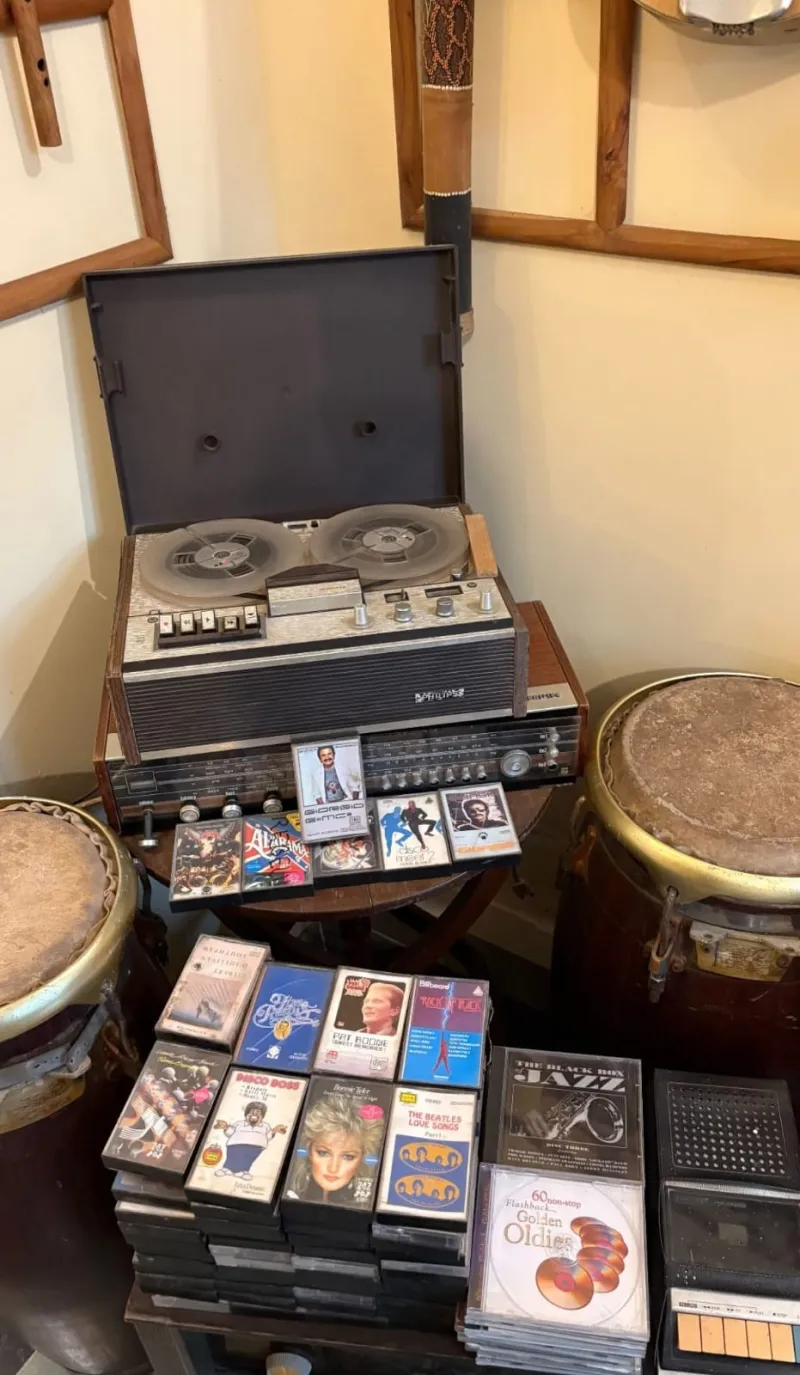
Photo: Himesh23, CC BY-SA 4.0, via Wikimedia Commons
Somewhere in a climate-controlled storage room in the American South, a cardboard box holds a collection of acetate discs recorded in the early 1940s. The grooves are intact, more or less. But the lacquer is flaking at the edges, and a faint chemical odor—the unmistakable signature of vinegar syndrome—suggests that time is no longer neutral. Inside those grooves: a Delta blues musician who never made a commercial record, captured in a single informal session by a researcher whose name is half-erased from the accompanying paperwork. If no one intervenes within the next few years, the recording may become unplayable.
This scenario is not hypothetical. It is, by most estimates, representative of thousands of similar situations unfolding in archives, university basements, private collections, and regional libraries across the United States. The materials vary—reel-to-reel tapes suffering from binder hydrolysis, wax cylinders too fragile to play without risk, cassette recordings of indigenous oral storytelling made by well-intentioned researchers in the 1970s—but the underlying crisis is consistent. The physical carriers of American sound history are failing, and the institutions responsible for preserving them frequently lack the resources, the expertise, or the will to act quickly enough.
What has emerged in response is something that defies easy categorization: a decentralized, often underfunded, and deeply motivated movement of individuals and small organizations committed to the belief that audio recordings constitute primary historical documents—ones that carry emotional, cultural, and linguistic information that no transcript or photograph can adequately substitute.
The Technical Dimension: More Than Digitization
The popular understanding of archival audio work tends to collapse into a single word: digitization. In practice, the process is considerably more layered. Before a deteriorating disc can be transferred to a digital format, a trained technician must assess its condition, select the appropriate playback stylus—sometimes custom-fabricated for an unusual groove geometry—and determine whether cleaning or stabilization is necessary. Playing a damaged recording incorrectly can destroy it permanently.
For certain formats, the challenges are even more acute. Instantaneous discs, often called acetates, were never designed for long-term storage. They were cutting-room tools, intended for playback review rather than archival longevity. That so many survived at all is something of an accident. Retrieving clean audio from a disc with significant surface damage requires a combination of precision hardware and sophisticated digital signal processing—software capable of distinguishing between the intended signal and the noise introduced by physical deterioration.
Several independent engineers working in this space have developed their own methodologies, refined over years of handling materials that no established protocol fully addresses. Their work sits at the intersection of acoustic physics, materials science, and musicological intuition—a form of craft knowledge that is itself in danger of being lost if it is not passed forward.
What the Recordings Contain
The cultural stakes of this work become clearer when one considers the range of materials at risk. Field recordings made by researchers affiliated with institutions like the Library of Congress or the Archive of Folk Culture represent only a fraction of what exists. Equally significant are the recordings made outside institutional frameworks entirely: home recordings, informal documentation by local radio stations, amateur ethnographic work conducted by teachers, clergy, and community organizers who recognized that something worth capturing was passing from the world.
Among the most urgently imperiled are recordings that document languages and dialects now spoken by very few people, or no longer spoken at all. Linguists and indigenous community advocates have long argued that audio recordings carry dimensions of a language—prosody, tonal variation, the rhythm of storytelling—that written transcriptions cannot preserve. When a recording of a speaker of a critically endangered language deteriorates beyond recovery, what is lost is not a curiosity. It is irreplaceable evidence of how human beings organized meaning.
The musical dimensions are equally significant. Recordings of regional styles that predate commercial standardization—early Cajun fiddle music, shape-note singing from rural Appalachian communities, brass band rehearsals from mid-century Black neighborhoods in cities like New Orleans and Detroit—document an America that the recording industry largely chose not to commodify. Their survival is, in many cases, entirely contingent on the decisions being made right now by people working with very limited resources.
The Ethical Weight of Selection
Resource constraints introduce a question that the preservation community has not fully resolved: who decides which recordings are worth saving?
The framing of that question matters. In institutional settings, selection criteria have historically reflected the priorities of the institutions themselves—priorities that were not always culturally inclusive or democratically determined. Recordings of European classical music and Anglo-American folk traditions received early and sustained attention. Recordings made in Black, Latino, indigenous, and immigrant communities were frequently undervalued, mislabeled, or simply neglected.
Acknowledging this history does not resolve the present dilemma. Every archive operates under constraints. Triage is unavoidable. But the criteria by which materials are prioritized—cultural significance, historical rarity, community interest, technical salvageability—are themselves value-laden, and the people applying those criteria carry their own assumptions and blind spots.
A growing number of practitioners argue that the most ethically sound approach involves the communities whose voices and music are at stake in the selection process itself. This is not always straightforward. Communities may be geographically dispersed, internally divided about how their cultural materials should be handled, or understandably wary of institutional involvement given past experiences of appropriation. But the principle—that preservation decisions should not be made entirely by outsiders—has gained significant traction in recent years, and it is reshaping how some of the most thoughtful archival work is being conducted.
The Question of Access
Restoration raises a secondary question that is equally contested: once a recording is stabilized and digitized, who should be able to hear it?
Open-access advocates argue that recordings held in public institutions—or created with public funding—should be freely available, that restricting access to cultural heritage perpetuates the same hierarchies that shaped what was preserved in the first place. Others, particularly those working closely with indigenous communities, contend that certain recordings contain ceremonial or sacred material that was never intended for general audiences, and that unrestricted access can constitute a form of harm.
There is no universal answer, and responsible archivists are increasingly building access frameworks that are contextual rather than absolute—distinguishing between materials that should be broadly available and those for which community consultation is an ongoing requirement.
The Work Continues
What unites the engineers, musicians, scholars, and community advocates engaged in this work is a shared conviction that sound is not a secondary form of evidence. It is, in many respects, the most direct form of transmission available to us—the closest thing to presence that survives across time.
The recordings being rescued are not relics. They are voices that were set down in the hope, however unconscious, that someone on the other side of time would listen. The archivists and artists working to honor that hope are engaged in something that goes beyond technical preservation. They are insisting, with considerable effort and against considerable odds, that the full range of American experience deserves to be heard.