The Fifteen-Second Problem: Relearning How to Watch, Hear, and See
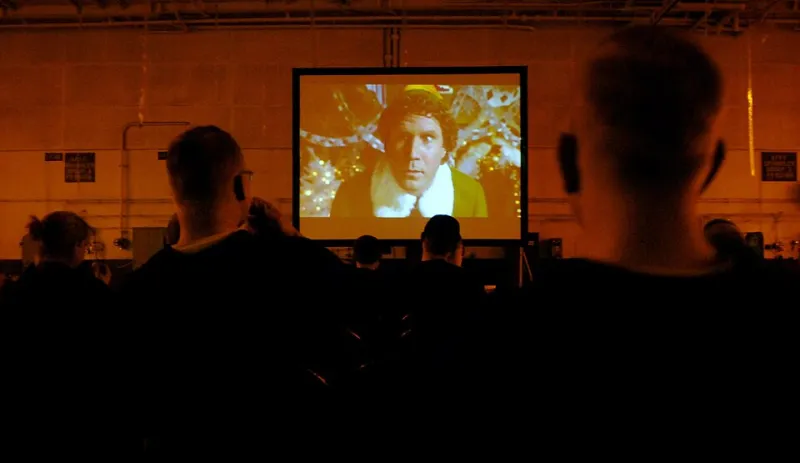
Photo: U.S. Navy photo by Mass Communication Specialist 2nd Class Arturo Chavez, Public domain, via Wikimedia Commons
Somewhere along the way, watching a movie became something you do while doing something else. The phone rests on the armrest. The film plays at 1.25x speed. Twenty minutes in, a plot point is missed, a rewind is skipped, and the experience quietly downgrades from encounter to background radiation.
This is not a moral failing. It is an environmental one. The platforms we use are engineered for the fifteen-second clip, and our habits have followed. But art — real art, the kind that changes people — was not made for the clip. It was made for the sustained gaze. Recovering that gaze is a skill, and like any skill, it can be practiced.
The Framework: One Sitting, One Screen, One Question
Start with a single rule: choose one work, give it one complete sitting, and remove every competing screen. That is the whole discipline. Everything below is elaboration.
For film: Watch a movie you have chosen deliberately, not one the algorithm surfaced. Turn subtitles on if they help you attend, off if you find yourself reading rather than watching. Do not pause to check anything. If a scene confuses you, let it stay confusing — confusion is often the director's tool, not your failure. Afterward, spend five minutes with no input at all. Do not immediately read reviews or watch a recap. The five minutes of unassisted thinking is where comprehension actually forms.
For music: The album, not the playlist, and certainly not the shuffle. Listen to a record front to back, in order, the way it was sequenced. Lie on the floor if it helps; nobody is watching. Notice the transitions between tracks — sequencing is an art form that streaming has made nearly invisible. If your attention drifts at minute eleven, note where it drifted. That is information about the music, or about you, and both are worth having.
For painting: The museum standard used to be ten seconds per artwork. Try the reverse: one painting, ten minutes. It sounds unbearable and is, for the first two minutes. Around minute three, the painting stops being an image and starts being an event. You begin to see the brushwork, the corrections, the places where the painter struggled. Guard at the exit will think you are odd. Let them.
Why Slowness Is Not Nostalgia
The objection is predictable: this sounds like nostalgia for a slower age, a Luddite's fantasy. It is not. Nobody is asked to give up the phone or the playlist permanently. The framework asks for one deliberate hour a week — a rounding error in anyone's screen-time report.
The reason to bother is empirical. Depth of attention is the precondition for depth of experience. A film half-watched produces half a film. A record heard as texture produces texture. The works that survive across generations do so because rewards are buried in them at every level of scrutiny, and shallow attention retrieves only the topmost layer. You are not honoring the artist by slowing down. You are collecting what you paid for.
A Modest Proposal
Pick this weekend. One film, one record, or one canvas. Ninety minutes, no second screen, five minutes of silence at the end. Then notice what you remember a week later. Most people who try this once find the difference so stark that the practice sustains itself. Attention is the scarcest cultural resource we have. It is also the only one that renews with use.